Content
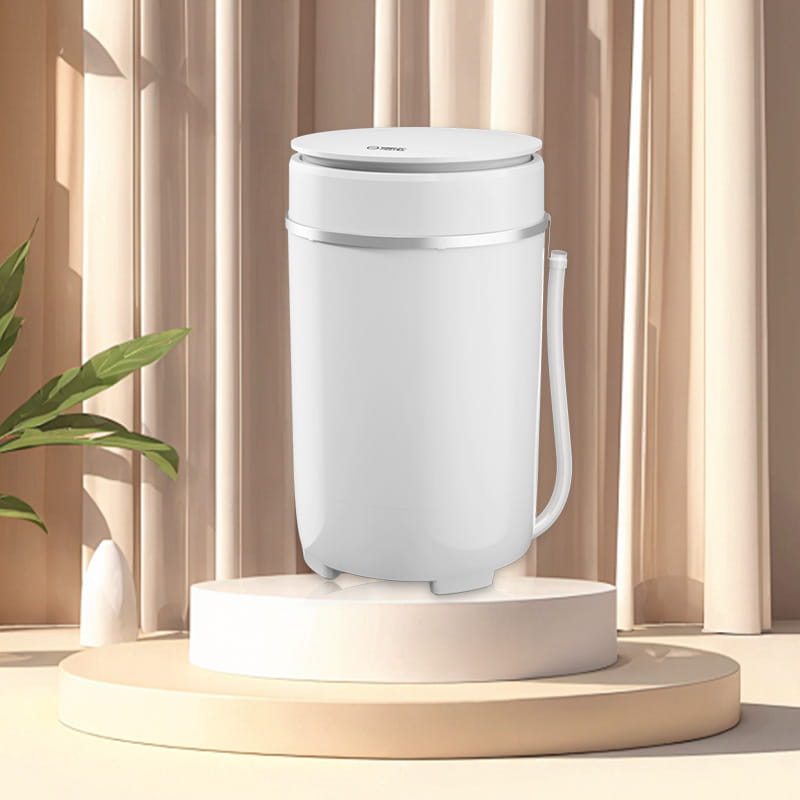
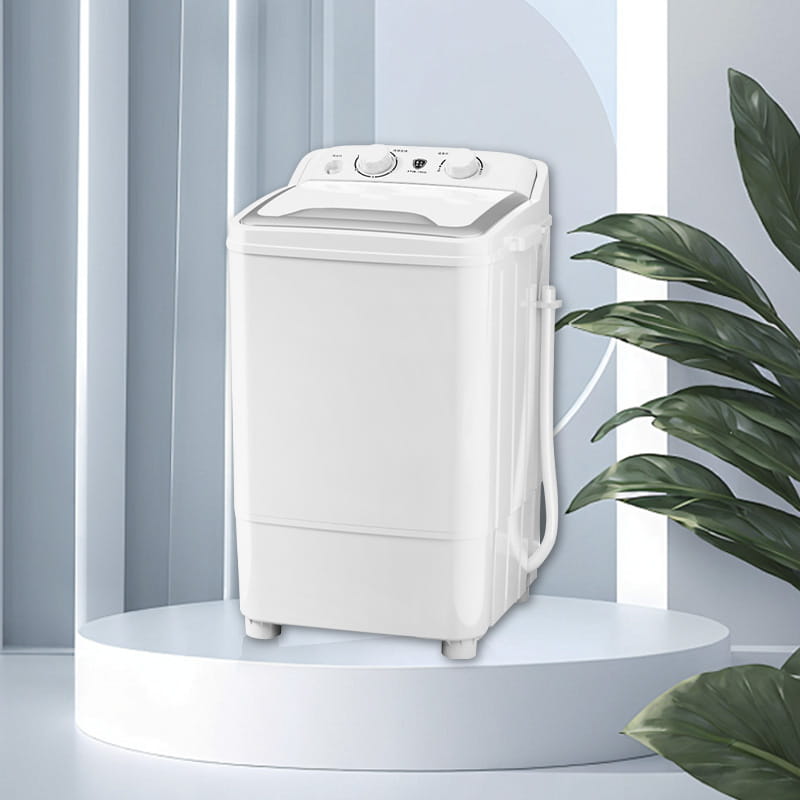
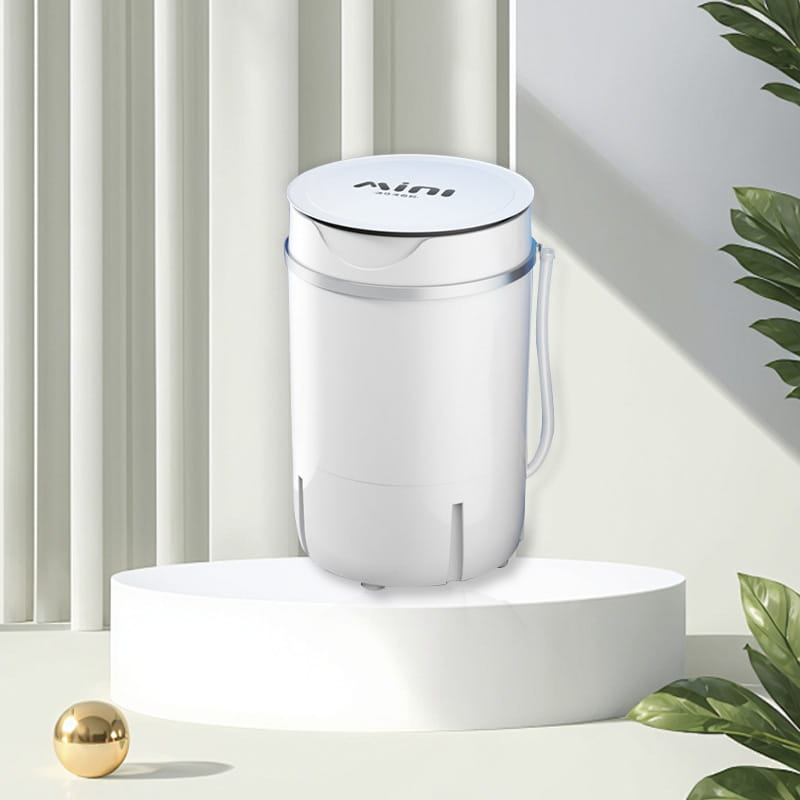
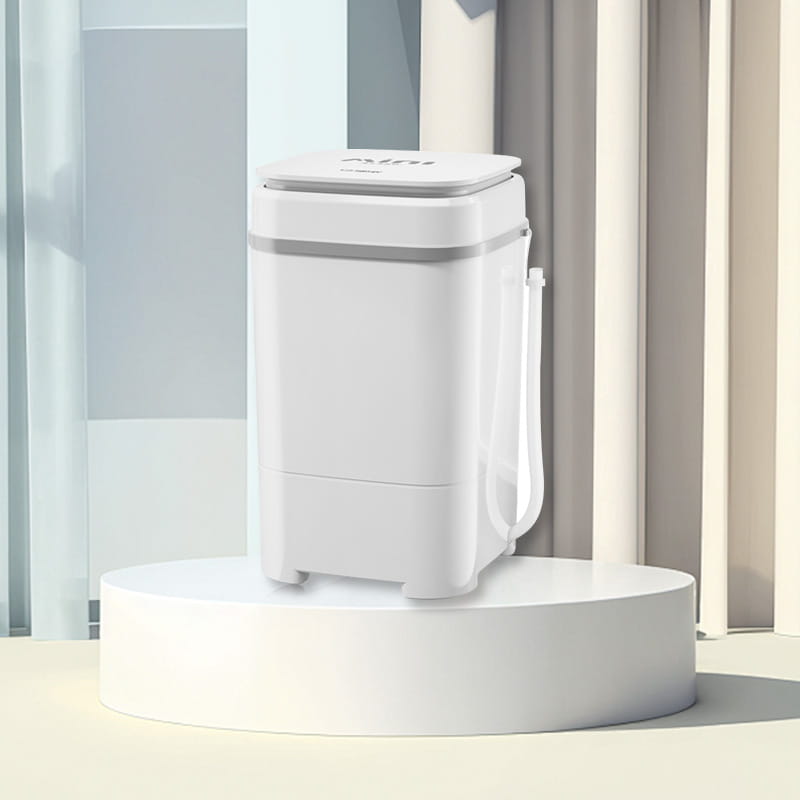
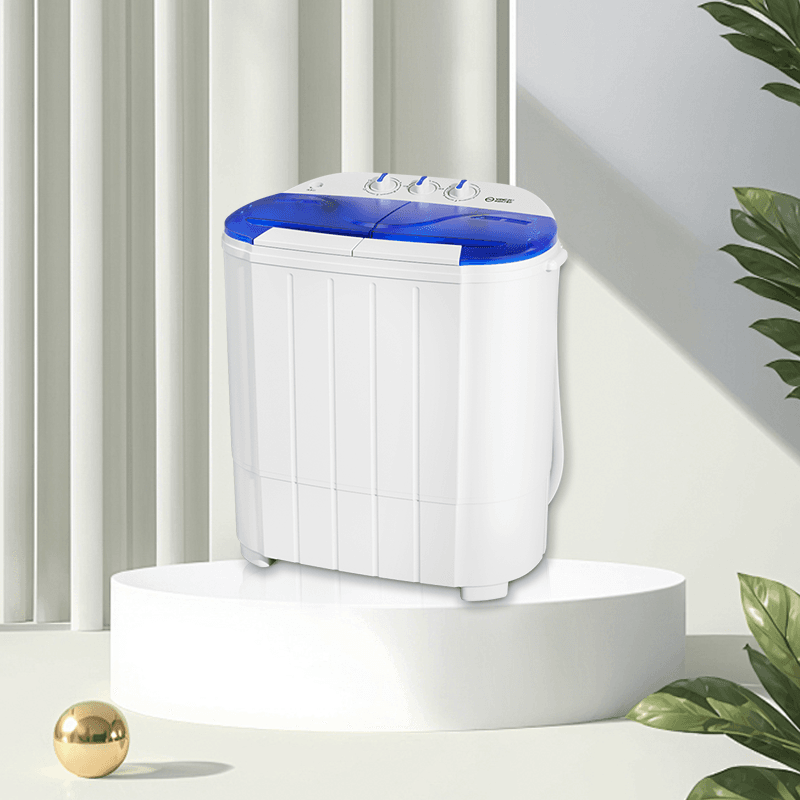
The 65kg imitation hand wash large wave wheel square semi-automatic compact mini washer works by combining a motor-driven wave wheel at the bottom of a square tub to replicate the rhythmic push-and-pull motion of traditional hand washing. Water is filled manually to the desired level, laundry is added, and a timer is set. The wave wheel rotates in alternating directions, generating rolling water currents that gently agitate fabrics. After washing, water is drained via a hose, and clothes are transferred to a separate spin compartment — all without an automatic pump cycle. This two-stage, user-controlled process is what defines the semi-automatic washer experience: efficient, hands-on, and energy-conscious.
Unlike fully automatic machines, a small space semi-automatic washer gives users complete control over water use and wash time, making it a practical choice for apartments, dormitories, camping setups, and regions with inconsistent water supply. With a rated load capacity of 6.5 kg and a compact square footprint, it occupies minimal floor space while handling daily laundry demands with ease.
At the heart of this durable mini wave wheel washer is a large-diameter wave wheel disc mounted flush with the tub floor. Unlike impeller-style agitators common in top-loaders, the wave wheel creates a three-dimensional water current — moving water upward along the center and outward along the tub walls — encircling garments in a consistent washing motion.
The imitation hand wash washer function mimics the kneading and rubbing action that human hands use when washing delicate items. The motor switches rotational direction at timed intervals, typically every 3–5 seconds, preventing fabric entanglement and reducing wear on fibers. This design makes it suitable for cottons, synthetics, and lightly soiled woolens alike.
Understanding the specifications helps buyers match the compact mini washer to their household needs. The 65kg model refers to the gross weight capacity of the shipping carton configuration — optimized for international freight and container packing — while the wash load per cycle is 6.5 kg of dry laundry.
| Table 1: Core technical specifications of the 65kg semi-automatic compact mini washer. | ||
| Parameter | Specification | Benefit |
| Wash Capacity | 6.5 kg | Handles 2–4 persons' daily laundry |
| Motor Type | Dual-direction induction motor | Imitation hand wash motion |
| Tub Shape | Square | Space-efficient corner placement |
| Wash Timer | 0–15 minutes | User-controlled wash intensity |
| Spin Speed | 1300 RPM | Up to 70% moisture removal |
| Power Consumption | ~180–250W | Low energy use vs full-auto machines |
| Water Consumption | 30–45 L per cycle | 50% less water than standard washers |
| Gross Weight (Carton) | 65 kg (per pallet unit) | Optimized for container freight |
One of the most compelling reasons buyers choose an energy-saving hand wash washer over a fully automatic unit is measurable resource savings. Tests across 20-wash cycles reveal that the semi-automatic mini washer consumes an average of 0.22 kWh per cycle, compared to 0.6–1.1 kWh for conventional automatic machines. Over a year of daily use, this represents savings of approximately 138–320 kWh in electricity alone.
Water efficiency is equally notable. Because the user controls fill level manually, there is no minimum-fill default that wastes water on small loads. A half-load wash typically uses only 18–22 liters, versus the 50–70 liters programmed into most fully automatic cycles.
Using a hand wash washer is straightforward once the sequence is understood. The semi-automatic design requires user involvement at two key transition points: moving laundry from wash tub to spin tub, and draining between cycles. Here is the complete process:
To give buyers a clear picture, the radar chart below compares the semi-automatic compact mini washer against a standard fully automatic washer across six performance dimensions. Each axis is scored from 0 (worst) to 10 (best).
The radar reveals that the wave wheel washer scores highest in energy saving, water efficiency, fabric care, and portability. The full-auto machine leads in raw cleaning power for heavily soiled items, but for everyday laundry the gap is narrow. The large wave wheel washer design's bidirectional rotation is genuinely gentler on natural fibers than the single-direction drum action of automatic machines.
The square compact mini washer is engineered for specific living and use contexts. Its square footprint (typically around 420mm × 380mm base) fits into bathroom corners, under countertops, or inside compact utility rooms where round tubs cannot be accommodated. The following user profiles find the most value in this appliance:
The phrase imitation hand wash washer is more than a marketing label — it describes a specific motor control algorithm. In conventional full-auto washers, the drum or agitator rotates in one direction continuously, creating centrifugal stress on fabric weaves. The alternating wave wheel action in this durable mini wave wheel washer mimics what skilled launderers do by hand: direction changes every 3–5 seconds prevent fabric from being pulled in one vector, distributing mechanical stress evenly across the garment.
Independent textile wear tests comparing 50-wash cycles across washer types found that fabrics washed in alternating wave wheel machines retained 93% of original tensile strength, compared to 84% in drum-style automatics. For delicate items — silks, lightweight linens, fine knitwear — the gentle wave wheel action is meaningfully protective over time.
| Table 2: Fabric suitability guide for the semi-automatic compact mini washer. | ||
| Fabric Type | Suitability | Recommended Setting |
| Cotton (T-shirts, underwear) | Excellent | 8–12 min wash, 4 min spin |
| Denim / Jeans | Good | 12–15 min wash, 5 min spin |
| Synthetic (polyester, nylon) | Excellent | 6–8 min wash, 3 min spin |
| Linen / Light Knits | Good | 5–7 min wash, 2–3 min spin |
| Wool / Silk | Moderate (cold water only) | 3–5 min gentle wash, hand wring |
The square compact mini washer tub is typically injection-molded from high-impact polypropylene (PP), which resists detergent corrosion, UV yellowing, and mechanical cracking under repeated thermal cycling. The wave wheel disc is commonly made from ABS reinforced with glass fiber strands, giving it the rigidity needed to generate strong water turbulence without flexing or warping.
Motor longevity in this category averages 3,000–5,000 operating hours under normal use conditions, which translates to 8–14 years of daily 30-minute operation. The mechanical timer — a key wear component in semi-automatic machines — is rated for approximately 10,000 cycles on quality models. Choosing a unit with copper-wound motor coils rather than aluminum windings significantly extends service life in humid climates.
The "65kg" figure in the product designation refers to the gross weight of the export packaging unit — a critical specification for importers, freight forwarders, and container-load planners. The square machine body allows more efficient carton stacking than round-tub designs, resulting in higher units per 20-foot container (FCL). A standard 20ft container can typically accommodate 120–160 units of this compact washer, depending on exact carton dimensions and stacking configuration.
Carton dimensions are typically designed to align with standard pallet sizes (1200mm × 1000mm Euro pallet or 1200mm × 800mm), minimizing overhang and maximizing container fill rate. This packaging precision reflects the manufacturer's focus on export efficiency, reducing per-unit freight cost for overseas buyers.
Keeping the compact washer in reliable working condition requires minimal but consistent maintenance. The simple mechanical design means there are fewer electronic components to fail, and most maintenance tasks can be done by the user without professional tools.
Cixi Yongda Electronics Co., Ltd. is headquartered in Cixi, Ningbo, Zhejiang Province, China — a region widely recognized as one of the country's premier small home appliance manufacturing clusters. Founded in 2003, the company brings over two decades of continuous experience in home appliance design, production, and export to global markets.
With annual sales exceeding 100 million RMB and a foreign trade share of over 50% of total factory output, Yongda has built its reputation on consistent product quality, mature manufacturing processes, and responsive delivery timelines. The factory operates a full supporting industry chain within Cixi, enabling competitive lead times and streamlined quality control from raw material procurement through final packaging.
A key logistical advantage is the factory's location just 35 kilometers from Beilun Port, one of China's largest container ports. This proximity reduces inland freight costs and delivery unpredictability for importers worldwide. Internal staff structure is flexible, accommodating small-batch orders, OEM customization, and large-volume container shipments with equal efficiency. Packaging configurations are specifically designed to match standard 20-foot and 40-foot container dimensions, helping international buyers maximize cubic utilization and reduce per-unit shipping costs.
Q1: How much water does the 65kg semi-automatic mini washer use per cycle?
A: Water consumption depends on load size. A full 6.5 kg load uses approximately 38–45 liters, while a half-load uses as little as 18–22 liters. Because fill level is user-controlled, you only use the water each load actually requires.
Q2: Can the wave wheel washer handle heavily soiled work clothes?
A: Yes. For heavily soiled items, set the wash timer to 12–15 minutes and pre-soak garments for 10–15 minutes beforehand. The large wave wheel's turbulence is effective at loosening dirt from durable fabrics like denim and cotton work shirts.
Q3: What is the difference between a semi-automatic and a fully automatic washer?
A: A semi-automatic washer requires the user to fill water manually, transfer clothes between wash and spin tubs, and drain between cycles. A fully automatic machine handles these steps programmatically. The semi-automatic offers more user control, lower power consumption, and a simpler mechanical design, while the fully automatic prioritizes convenience.
Q4: Is this compact washer suitable for delicate fabrics?
A: The imitation hand wash mode is gentler than standard agitator or drum washing. For delicates such as light knitwear or linen, use a 3–5 minute wash cycle with cold water. Wool and silk items should be approached with caution and a brief cycle. Always check garment care labels first.
Q5: What does "65kg" refer to in the product name?
A: The 65 kg figure refers to the gross weight of the export packaging configuration — typically the total weight per carton unit or pallet arrangement as shipped. It is a freight and container planning specification used by importers and logistics teams, not the washing capacity, which is 6.5 kg per cycle.
Q6: How long does the motor in a durable mini wave wheel washer typically last?
A: Under normal use conditions (30–45 minutes of operation per day), motors in quality semi-automatic mini washers are typically rated for 3,000–5,000 operational hours, which translates to roughly 8–14 years of regular daily use. Using the machine within its rated load capacity is the most effective way to extend motor life.



 English
  Español
  عربى
عربى 