Content
When it comes to RV travel, choosing a lightweight portable washer that is easy to carry, compact in size, and efficient in performance can make a real difference in your road trip experience. Based on practical travel needs, semi automatic portable washing machines and mini compact models both serve RV users well — but their suitability depends on travel frequency, available storage space, and laundry volume. This article breaks down what matters most so you can make a well-informed decision before your next journey.
The demand for portable washing machines for travel has grown significantly in recent years as more people embrace mobile living, van life, and extended camping trips. With limited access to laundromats on the road, having a reliable washer inside your RV has become not just a convenience but a practical necessity. Today's lightweight portable washers are designed with low water usage, quiet motors, and compact footprints — features that align perfectly with the needs of modern RV travelers.
RV travelers consistently choose lightweight portable washers over traditional laundry solutions because of their practical advantages in mobile environments. Unlike fixed appliances, these compact machines can be stored in tight spaces, carried without strain, and used with minimal water and power connections. For anyone spending extended time on the road, this level of flexibility is invaluable.
Key advantages of lightweight portable washers for RV users include easier carrying and movement between storage and use positions, compatibility with compact RV storage compartments, lower vibration during the spin cycle which reduces noise on the road, reduced water consumption compared to full-size machines, and the ability to handle small clothing loads conveniently during trips. These features make them especially suitable for RV living, camper vans, dormitories, and outdoor camping setups.
The chart above illustrates the most important purchasing factors for RV travelers when selecting a portable washing machine. Lightweight design tops the list at 92%, reflecting how critical easy handling is for road trip users. Compact storage compatibility closely follows at 88%, confirming that RV space constraints are a dominant concern. Quiet operation ranks third at 79%, especially important for travelers who wash laundry in the evening at campgrounds. Low water usage at 74% and easy drainage at 68% reflect the resource-conscious mindset of modern RV enthusiasts. Semi-automatic washing control, while ranked last here, remains a valuable feature for travelers who prefer precise wash cycles and separate spin functions during longer journeys.
Not all portable washers are created equal. When choosing a compact portable washer for RV travel, several features directly affect daily usability and long-term satisfaction. Understanding these features in detail will help you avoid common pitfalls and select a machine that truly fits your mobile lifestyle.
The physical dimensions and weight of a portable washer are the most immediate concerns for RV users. Smaller machines — particularly those in the mini portable washer category — are significantly easier to lift from storage compartments, move to washing positions, and return after use. A machine with integrated side handles further improves portability and reduces strain during transport. Compact dimensions also ensure compatibility with the limited cabinet and storage spaces typical in RVs and camper vans.
Quiet portable washers are especially appreciated at campgrounds and residential areas where noise restrictions apply. A high-quality motor with low vibration ensures that your washing cycle does not disturb fellow campers or your own rest. The XPB30-65 model, for example, features a premium motor specifically selected for strong power output combined with stable, quiet long-term operation — making it an ideal choice for nighttime or early morning laundry during travel.
A semi automatic portable washing machine gives users direct control over each stage of the laundry process, including wash time, water level, and spin duration. This flexibility is valuable on the road where water sources may be limited. Semi automatic models also tend to use less water per cycle compared to fully automatic machines, making them well-suited to the water conservation demands of RV travel and extended camping.
Foldable washer models offer an additional advantage in storage flexibility. When not in use, a foldable structure reduces the footprint of the machine to a fraction of its operational size, freeing up valuable RV cabinet and floor space. This is particularly useful for smaller camper vans and compact motorhomes where every cubic inch of storage counts.
Efficient drainage is critical when using a portable washer in temporary locations. Machines that feature flexible drain hoses and gravity-assisted drainage systems make it easier to direct wastewater into designated disposal points at campgrounds or RV parks. A stainless steel draining basket paired with an integrated drainage tube significantly speeds up the post-wash process, allowing the combined wash-and-drain cycle to complete in approximately 15 minutes — 10 minutes washing and 5 minutes draining — keeping your laundry routine quick and manageable.
There is no single best portable washer for every RV user. The right choice depends on your travel patterns, laundry load sizes, and available storage space. Below is a breakdown of the most common portable washer types and their ideal use cases.
| Comparison of portable washer types for RV and travel use scenarios | ||||
| Washer Type | Best For | Capacity Range | Storage Friendliness | RV Suitability |
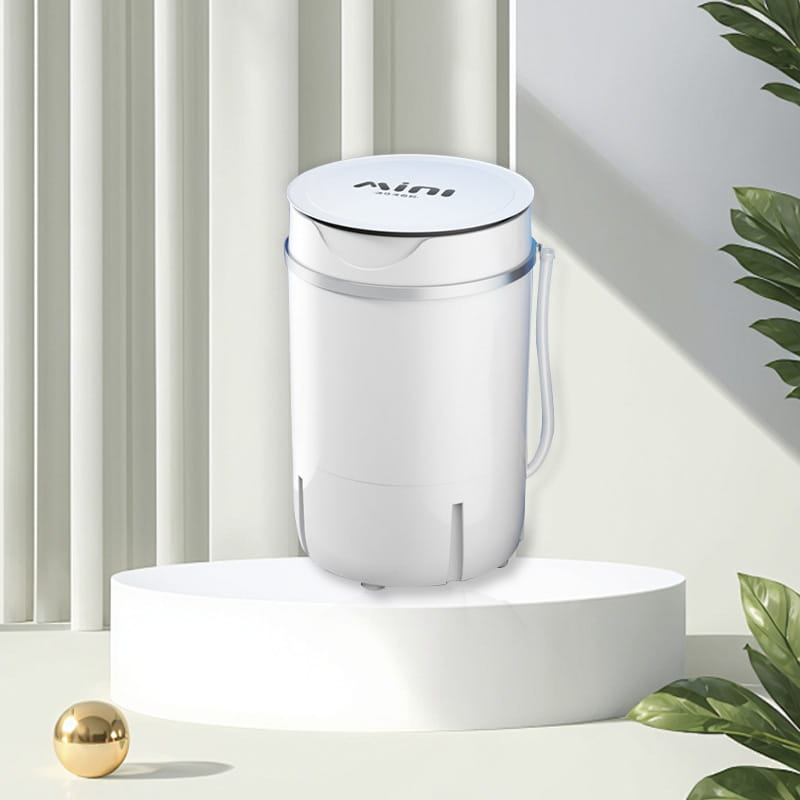
| Mini Portable Washer | Solo travelers, short trips | 1–3 kg | Excellent | Very High |
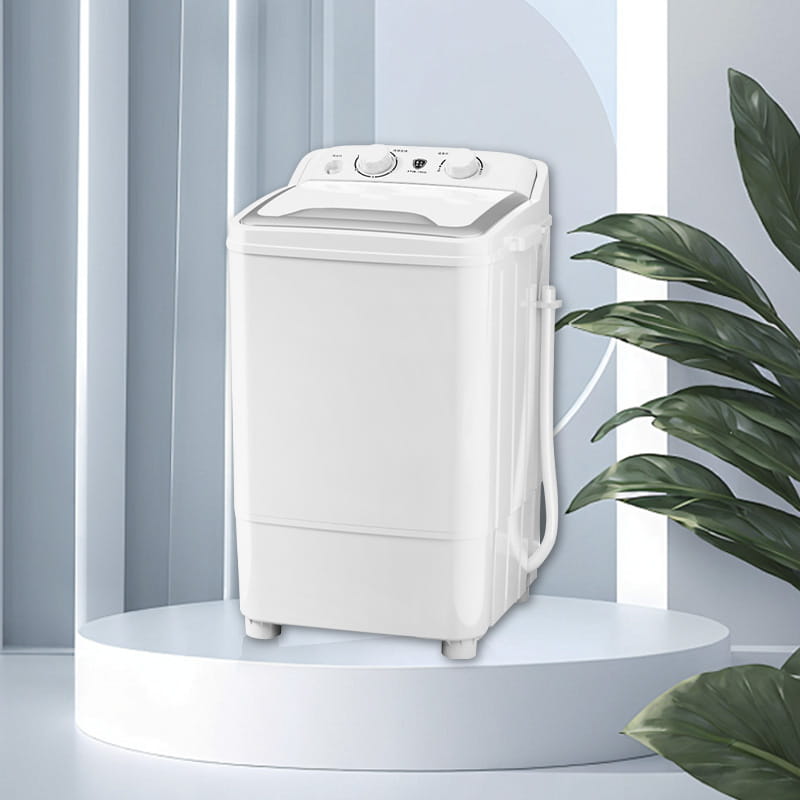
| Twin Tub Semi Automatic | Longer trips, families | 3–6.5 kg | Moderate | High |
| Foldable Portable Washer | Limited space, occasional use | 1–2 kg | Outstanding | Very High |
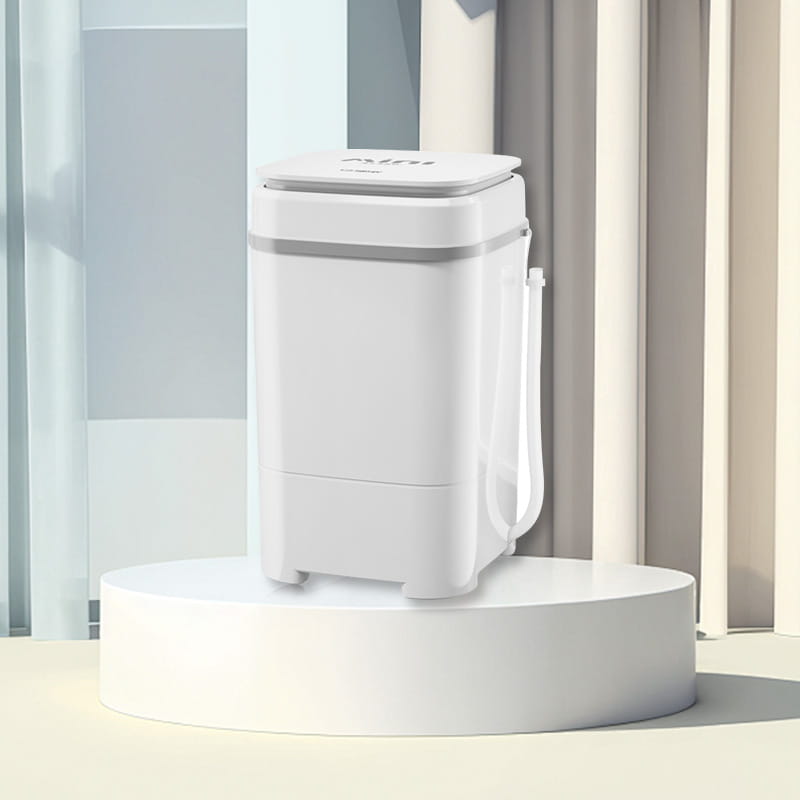
| Single Drum Compact Washer | Baby clothes, intimate apparel | 3 kg | Very Good | Very High |
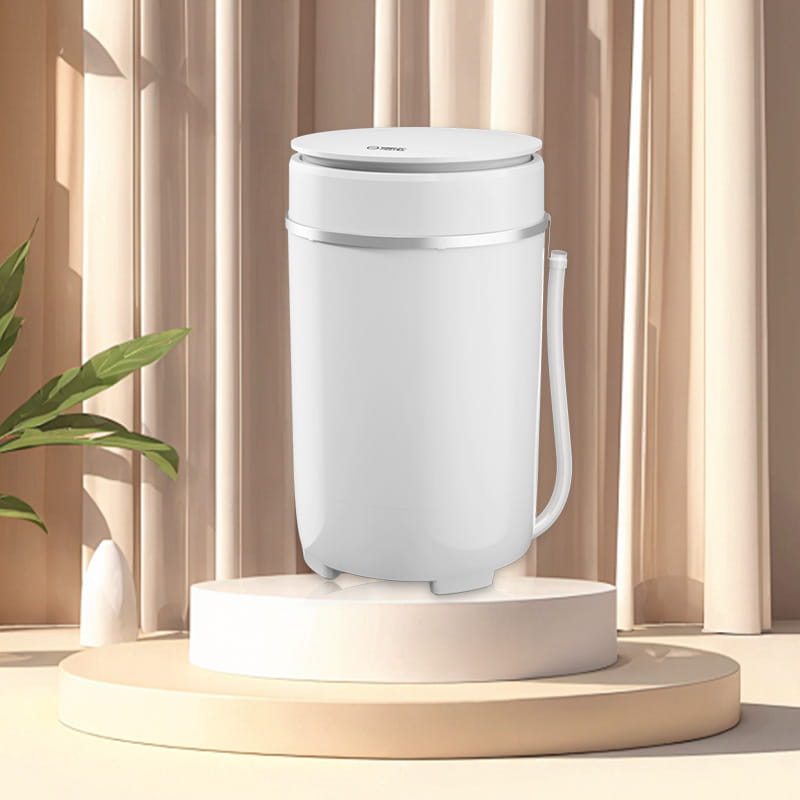
Mini portable washers remain the most popular choice for solo RV travelers due to their extremely compact footprint and light body weight, making them easy to position anywhere inside the vehicle. Twin tub semi automatic models are preferred by couples and families traveling for extended periods, as the separate wash and spin tubs allow simultaneous or sequential laundry processing, significantly reducing total laundry time. Foldable designs are ideal for minimalist travelers who prioritize storage economy above all else. Single drum compact washers like the XPB30-65 model occupy a practical middle ground — small enough for RV use yet capable of handling a meaningful 3 kg load in a single cycle.
The debate between semi automatic portable washers and compact single-drum portable washers is one of the most common among RV buyers. Each type has distinct strengths depending on how you travel and what you prioritize in a laundry solution.
The radar chart above provides a clear visual comparison between semi automatic and compact portable washers across six performance dimensions critical to RV travel. Compact portable washers score highest in portability and storage efficiency, making them the obvious choice for minimalist travelers and those with very limited RV space. Semi automatic models, on the other hand, excel in washing capacity and overall wash quality, offering bionic hand-washing action and a new inner drum structure that rinses clothing at deep layers for more thorough stain removal. The water-saving advantage of semi automatic models reflects their flexible water level control — users can precisely dial in how much water each load needs, reducing waste on extended trips. Quiet operation slightly favors compact models due to their smaller motor load, though high-quality motors in semi automatic units have significantly narrowed this gap in recent designs. For RV travelers expecting a mix of daily small loads and occasional larger washes, the semi automatic type offers the most versatile performance overall.
| Direct feature comparison for RV portable washer selection | ||
| Feature | Semi Automatic Washer | Compact Portable Washer |
| Portability | Good | Very Good |
| Washing Capacity | Medium (3–6.5 kg) | Small (1–3 kg) |
| Spin Function | Separate Spin Tub | Integrated |
| Storage Convenience | Moderate | Excellent |
| RV Compatibility | Excellent | Excellent |
| Water Control | Flexible | Moderate |
| Travel Convenience | Good | Very Good |
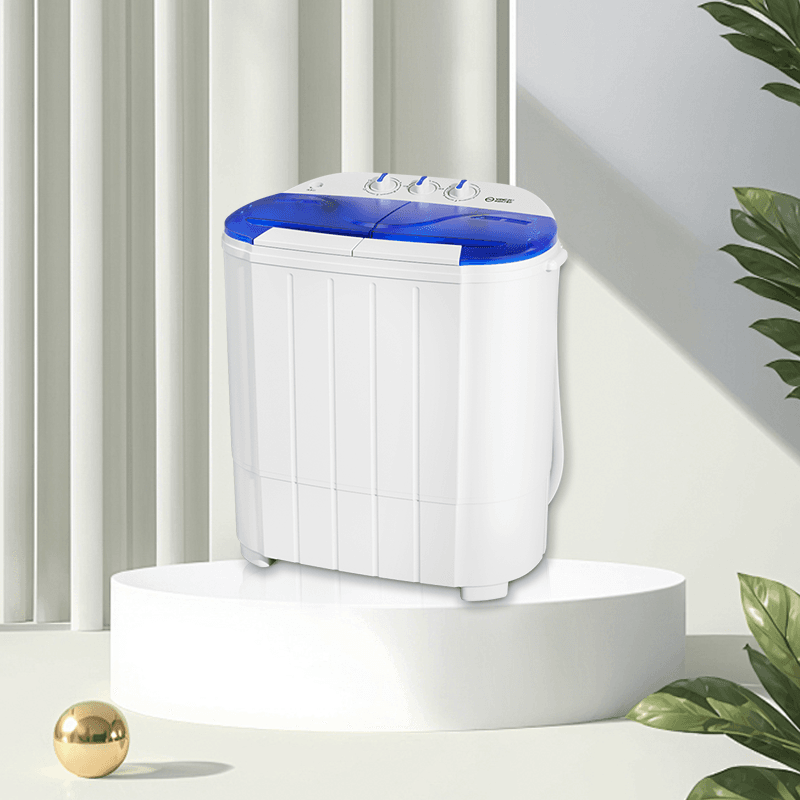
The XPB30-65 Single Drum Washing Machine is a well-rounded portable washer engineered specifically for users who need a compact, efficient, and hygienically reliable laundry solution. With a rated power of 300W, rated voltage of 220V, and frequency of 50Hz, it delivers consistent cleaning performance without excessive energy consumption — an important consideration for RV users managing limited power capacity.
One of its standout features is the blue light anti-bacterial washing system, which provides healthy washing while reducing cross-contamination risks. This is particularly useful for travelers who need to wash baby clothes, intimate apparel, and everyday clothing separately — a hygienic practice that the XPB30-65 actively supports through its antibacterial drum technology. The machine's bionic hand-washing capability replicates the natural washing motions of wrestling, kneading, rubbing, wringing, drying, shaking, and spreading, ensuring that clothing is rinsed thoroughly at deep fiber layers for gentle yet effective stain removal.
The 10-minute quick wash cycle makes it highly practical for RV use, where time and water are both at a premium. Combined with a 5-minute drain cycle using the stainless steel draining basket, the entire laundry process can be completed in approximately 15 minutes — a compelling advantage when parked at a campsite with limited stay time. The anti-pinch cover and wire winding rack are additional user-friendly design elements that improve safety and usability during travel.
The column chart highlights the four key performance dimensions of the XPB30-65 portable washer as rated through factory testing and user feedback in 2024. Quick wash efficiency scores highest at 94, confirming that the 10-minute wash cycle is one of the machine's most compelling features for RV travelers who value time efficiency. Antibacterial technology scores 91, reflecting genuine performance in reducing microbial contamination — particularly important for families traveling with infants or young children. Noise reduction at 88 demonstrates that the high-quality motor selection effectively minimizes operational sound, making the machine suitable for use in quiet campground environments. Water-saving performance at 86 underscores the machine's suitability for resource-conscious travel. Together, these scores present a well-balanced portable washer that addresses the most critical needs of the modern RV lifestyle without compromise.
Ease of carrying and storing a portable washing machine is just as important as its washing performance for RV users. Even the most capable washer becomes impractical if it is too awkward to move or store during travel. Several proven methods can significantly improve the portability experience.
Portable washers under 3 kg load capacity, such as the XPB30-65, are generally the most manageable for solo RV users to handle without assistance. Packaging designed to match standard shipping container dimensions — such as those produced for export markets — also indicates that the machine has been engineered with practical size efficiency in mind from the outset.
The line chart above illustrates the sustained growth of the global portable washer market alongside the specific RV and travel sub-segment from 2019 through 2024. The total market has expanded from approximately USD 1.8 billion in 2019 to an estimated USD 4.8 billion in 2024 — representing a compound annual growth rate of roughly 21.7%. The RV and travel segment has grown from USD 0.4 billion to USD 1.6 billion over the same period, a 300% increase that reflects the explosive rise in van life, overlanding, and extended road travel culture worldwide. The accelerated growth between 2020 and 2022 correlates strongly with increased domestic travel and remote work mobility trends during the post-pandemic period. By 2024, the RV and travel segment represents approximately 33% of the total portable washer market — a share that continues to grow as more consumers adopt mobile living as a long-term lifestyle rather than a temporary arrangement.
Even well-designed portable washers can encounter performance issues in RV environments. Understanding the root causes of common problems allows users to address them quickly and maintain consistent washing quality throughout their travels.
Vibration is one of the most commonly reported issues with portable washers used in RVs. The most frequent causes include uneven RV flooring or parking on a sloped surface, overloading the washing drum beyond its rated capacity, and clothing items clumping to one side of the drum during the spin phase. Solutions include placing a rubber anti-vibration mat under the machine, ensuring the RV is parked on as level a surface as possible before starting a spin cycle, and distributing clothing evenly throughout the drum at the start of loading.
Drainage issues typically arise from incorrect hose positioning, limited access to grey water drainage points at the campground, or blockages within the drainage pipe from accumulated lint or debris. Regularly checking and cleaning the drain hose, ensuring the outlet end is positioned lower than the machine's drum for gravity-assisted flow, and using a lint trap at the hose end are all effective preventive measures.
Unusual noise during washing is most often caused by an unstable placement surface, excessive laundry weight for the machine's capacity, or improper spin balancing. Ensuring the machine is placed on a firm, flat surface and loaded within its rated capacity are the most effective corrective steps. Regular maintenance — including drum cleaning, hose inspection, and internal drying after each use — also plays a significant role in reducing noise and extending the machine's operational lifespan.
Proper maintenance of a portable washing machine for travel is essential for long-term reliability, especially when the machine is subjected to the vibrations, temperature variations, and humidity changes inherent in extended road trips. A simple but consistent maintenance routine can significantly extend service life and maintain washing efficiency.
Cixi Yongda Electronics Co., Ltd. is headquartered in Cixi, Ningbo, Zhejiang Province, China — one of the most established small home appliance manufacturing hubs in Asia. Founded in 2003, the company has accumulated over 20 years of experience in designing and manufacturing home appliances, with annual sales exceeding CNY 100 million. The factory benefits from a complete supporting industry chain within the Cixi region, providing a strong competitive advantage in both production efficiency and component sourcing.
The company's products are currently exported to numerous countries worldwide, with foreign trade sales accounting for more than 50% of total factory output. Product packaging is specifically designed to match standard shipping container dimensions, facilitating cost-effective international logistics. The internal staff structure is organized to serve a diverse customer base efficiently, enabling rapid delivery timelines that meet the demands of global distributors and retail partners.
Strategically located just 35 kilometers from Beilun Port in Ningbo — one of the world's busiest container shipping terminals — Cixi Yongda Electronics benefits from outstanding logistics access to global markets. The combination of mature quality standards, competitive manufacturing costs, and responsive supply chain management makes the company a reliable partner for international buyers seeking high-quality portable washing machines, including the XPB30-65 semi-automatic lightweight portable mini washing machine and other compact home appliance solutions.
Q1: Can a lightweight portable washer be used effectively inside a moving RV?
A: Portable washers are designed for stationary use and should be operated only when the RV is parked on a stable surface. Operating a washer while the vehicle is in motion is not recommended, as it can cause mechanical stress on internal components and increase vibration. When parked, even on uneven terrain, using a rubber anti-vibration mat and leveling aids significantly improves wash quality and reduces machine strain.
Q2: Is the blue light anti-bacterial feature safe for washing baby clothes and intimate apparel?
A: Yes. The blue light anti-bacterial system in the XPB30-65 is specifically designed to support hygienic washing of sensitive garment categories, including baby clothes and intimate apparel. The technology works by inhibiting bacterial growth within the drum environment during the wash cycle, reducing the risk of cross-contamination between different clothing types. It is advisable to wash these garment types in separate cycles for best hygienic results.
Q3: How much water does the XPB30-65 use per wash cycle?
A: The XPB30-65 is a semi-automatic single drum washer designed for water-conscious use. Actual water consumption per cycle depends on the selected water level and load size, but as a single drum compact machine, it generally uses considerably less water per cycle than full-size automatic washers. This makes it well-suited to RV environments where fresh water supply may be limited or subject to campground usage fees.
Q4: What is the total time needed to complete a full wash and dry cycle with this portable washer?
A: The XPB30-65 features a 10-minute quick wash cycle combined with a 5-minute drain cycle using the stainless steel draining basket, bringing the combined machine cycle to approximately 15 minutes. This is significantly faster than standard automatic washing machines and is one of the key reasons this model is popular among RV travelers who need efficient laundry turnaround during limited campsite stays.
Q5: Is this portable washer suitable for travelers outside of China who use 110V power supply?
A: The standard XPB30-65 model is rated for 220V/50Hz power supply, which is the standard in Europe, Asia, Australia, and many other regions. For travelers in regions using 110V systems, such as North America, a step-up voltage converter would be required. It is advisable to confirm local power supply compatibility before use. Cixi Yongda Electronics works with international buyers to accommodate specific voltage and certification requirements for different export markets.
Q6: How does bionic hand-washing technology improve cleaning results compared to standard drum agitation?
A: Bionic hand-washing technology uses a redesigned inner drum structure that simulates the natural hand-washing motions of wrestling, kneading, rubbing, wringing, and shaking. This multi-directional mechanical action allows water and detergent to penetrate clothing at deeper fiber layers than standard single-direction drum agitation, resulting in more thorough stain removal with gentler fabric treatment. The approach is especially beneficial for garments that require careful handling, such as lightweight travel clothing, synthetic fabrics, and delicate everyday items common in RV travel wardrobes.



 English
  Español
  عربى
عربى 