Content
The direct answer is that a 30-65kg semi-automatic lightweight affordable portable washer machine suits travel, dormitories, apartments and recreational vehicles because it combines a compact single-drum design, a quiet motor, a short wash cycle and a light overall weight that one person can lift and store without dedicated laundry room space. Unlike full-size laundry equipment that requires fixed plumbing and a permanent installation footprint, this category of mini washing machine is built around portability first, which is why it is increasingly chosen by renters, students, campers and small households that need a working wash solution without a large space commitment.
This article explains the engineering reasoning behind that conclusion in detail, covering wash cycle mechanics, structural components, space comparisons, feature balance, technical parameters and practical use cases. Throughout the discussion, the terms quiet portable washer, lightweight portable washer machine and compact mini washing machine for travel are used interchangeably to describe the same functional category, since search behavior around portable laundry appliances tends to use these phrases in combination.
A semi-automatic lightweight portable washing machine is a small-capacity laundry appliance built around a single wash drum that handles agitation, rinsing and spin-assisted draining without requiring the user to move clothing between separate wash and dry compartments during the cycle. The word semi-automatic refers to the level of manual involvement: the user fills the drum with water, selects the timer, and manages the draining step, while the machine automates the actual washing motion. This is distinct from fully automatic machines, which handle water intake, draining and cycle switching without manual steps, but which are also significantly heavier, larger and dependent on fixed plumbing.
The 30-65kg designation in the product name refers to the rated capacity range the drum is engineered to handle across different load sizes, giving flexibility for anything from a single traveler washing a few garments to a small household batch load. Because the entire unit is designed around a single drum rather than separate wash and spin tubs, the overall footprint stays small enough to fit in a bathroom corner, a closet, a balcony, or the back of a camper van, which is the central reason this category is frequently searched alongside terms like travel washer and dorm washing machine.
For most people considering a portable washing machine, the deciding factor is not maximum load size but whether the unit can be moved, stored, and set up without construction work. A lightweight single-drum design typically weighs a fraction of a standard front-load or top-load machine, which means it can be carried by one adult, placed on a tabletop or low shelf, and drained into a standard sink or bathtub. This is why the category is often described using phrases such as affordable portable washer machine and space-saving washer rather than being compared directly against full-size residential laundry systems.
Several structural elements determine whether a compact washer performs reliably over repeated use rather than failing after a short period. The most important of these are the wire winding rack, the stainless steel draining basket, and the anti-pinch cover, each of which addresses a specific practical problem that owners of portable laundry equipment commonly encounter.
Beyond these three elements, the internal tube structure plays a direct role in wash quality. A bionic hand-washing motion, achieved through the shape and ribbing of the inner tube, is intended to mimic the wrestling, kneading, rubbing and wringing motions of manual hand washing rather than relying purely on rotational agitation. This approach is commonly cited by manufacturers of compact washers as a way to improve stain removal on fabric without requiring the higher water volumes used by larger machines.
The quick wash cycle on this class of semi-automatic lightweight portable washer machine is generally structured around a 10-minute wash phase followed by a 5-minute drain phase, for a combined 15-minute cycle that covers wrestling, kneading, rubbing, wringing, drying, shaking and spreading motions in sequence. The chart below presents an illustrative breakdown of how that 10-minute wash phase is typically allocated across these motion stages, based on the general sequence described for this product category. The figures represent a general operational sequence rather than a laboratory-certified timing measurement, and actual timing may vary slightly by load size and fabric type.
Several conclusions can be drawn from this general sequence. First, the wringing and rubbing stages together occupy the largest share of the wash phase, which aligns with the manufacturer description of a bionic hand-washing motion designed to reach deep into fabric fibers. Second, the shaking and spreading stages toward the end of the cycle help loosen fabric before the drain phase begins, which reduces the chance of tangled clothing when the stainless steel draining basket takes over. Third, the overall 15-minute total cycle time is considerably shorter than a full-size machine cycle, which is one of the primary reasons this category is searched under terms like quiet portable washer for quick turnaround laundry. Fourth, because wash and drain happen within the same drum rather than requiring a transfer step, there is less handling of wet fabric between stages. Fifth, this structure is specifically suited to smaller loads such as travel clothing, undergarments, or gym wear, rather than large bedding items that would exceed the practical capacity of a compact single-drum unit.
Understanding how motor activity changes across a wash cycle helps explain why a well-built compact washer can operate with lower perceived noise than users often expect from a small appliance. The line chart below illustrates a general operational profile across the four functional stages of a cycle: fill, wash, rinse and spin-drain. This is a conceptual illustration of relative motor activity intensity rather than a measured decibel chart, since exact noise output depends on installation surface, load balance and water hardness.
The profile shows a low-activity fill stage as water enters the drum, followed by the highest activity during the wash stage where the bionic hand-washing motion is most active. Activity then decreases slightly during the rinse stage before rising again during the spin-drain stage, when the stainless steel draining basket engages. This pattern matters for users searching for a quiet portable washer because it demonstrates that peak motor engagement is concentrated in short bursts rather than sustained at maximum output for the entire 15-minute cycle. A stable motor mount and a level installation surface both play a meaningful role in keeping vibration and associated noise low during the higher-activity stages. Users placing the unit on a hard tile floor rather than a soft or uneven surface generally notice steadier operation, since an uneven base is one of the most common causes of vibration-related noise in compact single-drum machines. Selecting an appropriately sized load for the 30-65kg capacity range also helps maintain balance throughout the spin-drain stage.
Space efficiency is one of the strongest practical arguments for choosing a compact mini washing machine over a standard laundry setup, particularly for renters, students, and travelers who cannot install fixed plumbing. The donut chart below presents a general illustrative comparison of relative floor footprint allocation between a compact single-drum portable washer and a typical full-size residential laundry setup that includes a washer, dryer and surrounding clearance space. These proportions are conceptual estimates intended to communicate the general scale difference rather than precise architectural measurements.
Several practical points follow from this comparison. A compact single-drum washer typically requires only enough clearance to place the unit itself, a nearby water source, and a drain point such as a sink or tub, whereas a standard laundry setup requires dedicated utility space, ventilation for a dryer, and permanent plumbing connections. This difference is precisely why the portable washer category is frequently searched together with terms such as space-saving washer and mini washing machine for small apartment. Because the unit can be stored away between uses rather than occupying a permanent installation footprint, it suits studio apartments, shared housing, and vehicles such as RVs where every square foot has competing uses. The lightweight construction also means the unit can be relocated seasonally, for example moved indoors during colder months and onto a balcony or patio during warmer months. For travelers, this same space efficiency translates into an appliance that can be packed into a vehicle trunk or storage compartment without the bulk associated with full-size laundry equipment.
No single compact washer excels equally across every performance dimension, and understanding the trade-offs helps set realistic expectations. The radar chart below presents a qualitative feature profile across six dimensions relevant to a semi-automatic lightweight affordable portable washer machine: portability, noise control, wash performance, capacity flexibility, energy efficiency and ease of maintenance. These ratings reflect a general qualitative assessment based on the structural features described earlier in this article, rather than a standardized third-party laboratory benchmark.
This feature profile shows a category that scores strongly on portability and capacity flexibility, given the light single-drum construction and the 30-65kg rated range, while wash performance benefits from the bionic hand-washing motion described earlier. Noise control is supported structurally by a stable motor mount and quality motor selection, though real-world results depend on surface placement as discussed in the previous section. Energy efficiency benefits from the short 10-minute quick wash cycle, since shorter cycles generally consume less electricity than extended full-size wash programs. Ease of maintenance is aided by the stainless steel draining basket, which resists the buildup and corrosion that plastic components can develop over repeated use. Taken together, this profile explains why the product category is positioned around the terms affordable portable washer machine and lightweight portable washer machine rather than being marketed as a replacement for large-capacity residential laundry systems.
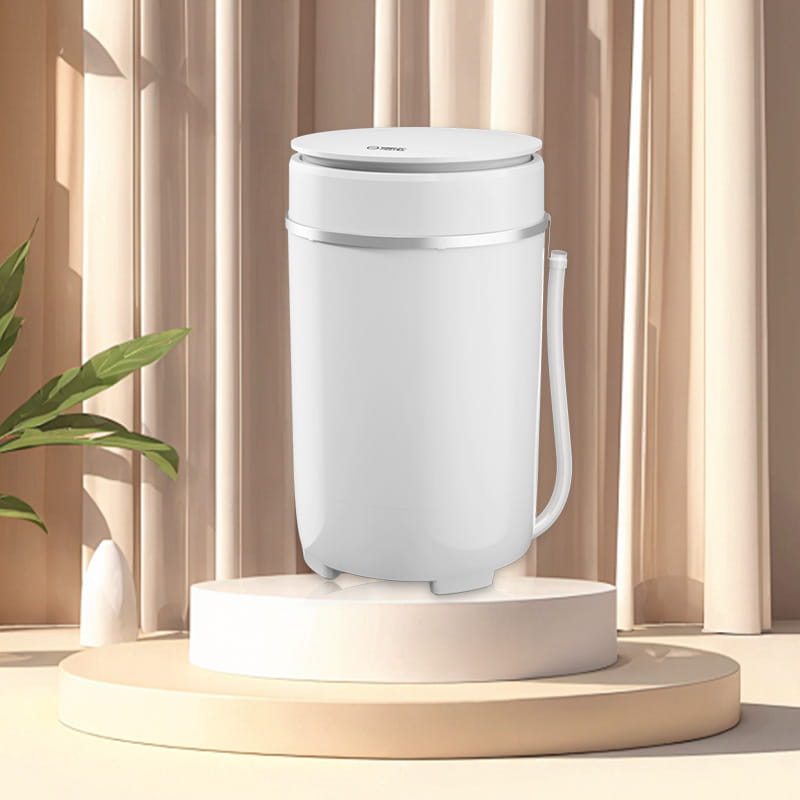
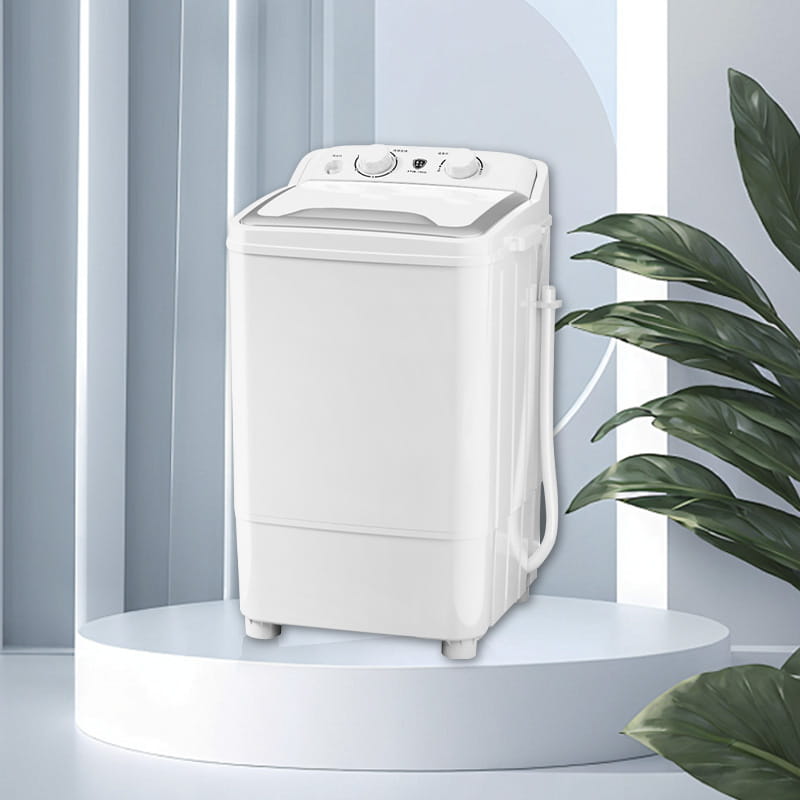
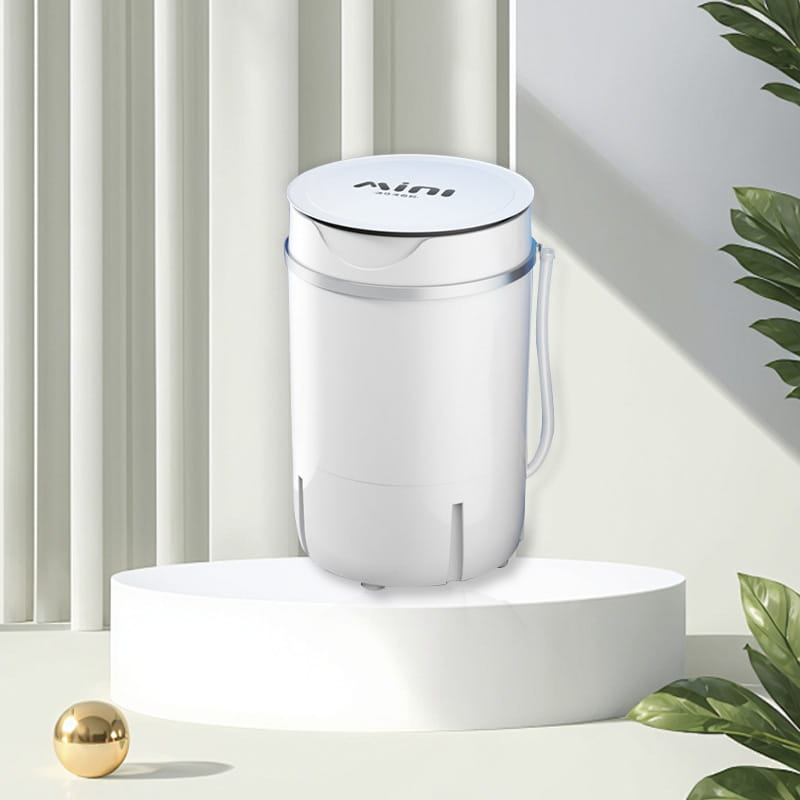
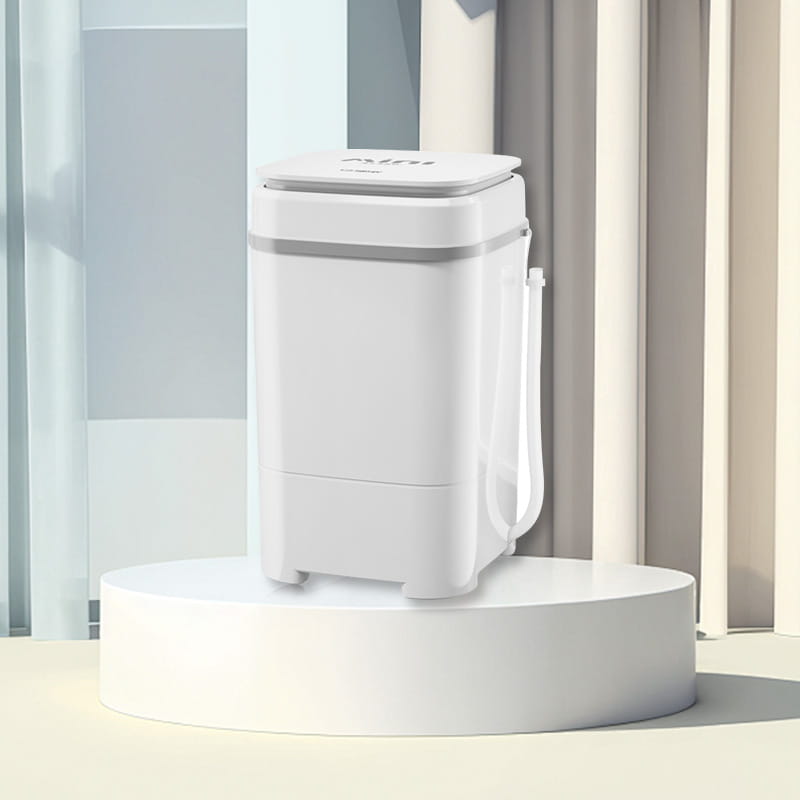
The following image shows the physical form of the 30-65kg semi-automatic lightweight quiet portable mini washing machine, followed by an isometric component diagram highlighting the wire winding rack, stainless steel draining basket, and anti-pinch cover discussed earlier in this article.
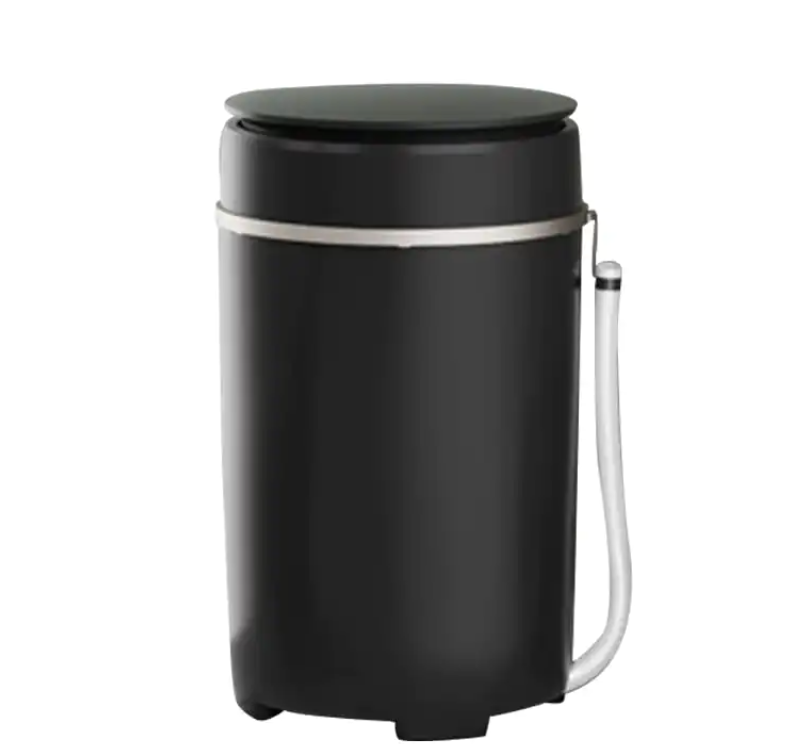
The isometric diagram below labels the primary functional components referenced throughout this article, providing a visual reference for how the single-drum design integrates the wash, rinse and drain functions into one compact housing.
The technical parameters for this model are summarized in the table below, which lists the officially rated electrical and structural specifications as provided by the manufacturer.
| Parameter | Specification |
|---|---|
| Product Name | Single Drum Washing Machine |
| Model | XPB30-65 |
| Rated Capacity Range | 30-65kg |
| Rated Power | 300W |
| Rated Voltage | 220V |
| Rated Frequency | 50Hz |
| Wash Cycle | 10-minute wash plus 5-minute drain |
Note that the physical dimensions of this appliance are measured manually during production, so a variance of one to two centimeters against listed figures may occur, and the physical unit should be treated as the accurate reference for exact fitting purposes.
The practical value of a semi-automatic lightweight affordable portable washer machine becomes clearest when mapped against specific living situations where fixed laundry infrastructure is not available or not convenient. The table below outlines common use scenarios and the corresponding reason the compact single-drum design fits each situation.
| Scenario | Why the Compact Washer Fits |
|---|---|
| Extended travel or road trips | Lightweight housing fits in a vehicle trunk and needs only a nearby water source |
| Dormitories and shared housing | Small footprint and quiet operation suit shared living arrangements |
| Studio and small apartments | No permanent plumbing installation required, unit can be stored when not in use |
| RV and camper laundry | Compact drum design suits limited onboard space and intermittent power access |
| Households with infants | Separate small-load washing helps keep baby clothing apart from general laundry |
In each of these scenarios, the core value proposition remains consistent: a compact mini washing machine for travel gives users a working wash cycle without requiring the space, plumbing, or installation commitment of a standard laundry system. For households managing infant clothing or intimate apparel, running separate small loads on a dedicated compact unit is also a practical way to avoid mixing delicate or sensitive garments with general household laundry, which is a habit frequently recommended for hygiene reasons in shared or family settings.
Consistent maintenance extends the working life of any compact washing machine, and the routines below apply specifically to the single-drum semi-automatic design described in this article.
Following these routines helps preserve the quiet operation and consistent wash performance that define this appliance category, and it reduces the likelihood of premature wear on the motor or draining components.
Interest in compact and portable laundry solutions has grown alongside broader shifts in urban housing patterns, with smaller apartment sizes and increased renting rates in many cities making fixed laundry installations less practical for a growing share of households. Trade coverage of the small household appliance sector has noted that consumers increasingly weigh portability and space efficiency alongside traditional factors such as wash performance when evaluating laundry equipment, a trend consistent with the design priorities described throughout this article. Outdoor and travel lifestyle publications covering camping, van living and long-distance travel have similarly highlighted demand for compact wash solutions that do not depend on fixed utility hookups, reflecting the same underlying need addressed by a lightweight single-drum washer.
This shift also intersects with a broader consumer preference for appliances that support quieter home environments, particularly in shared housing and multi-unit residential buildings where noise transfer between units is a common concern. A quiet portable washer designed with a stable motor mount and a short wash cycle addresses this preference directly, since shorter cycles reduce the total duration of any operational noise regardless of its peak level. As compact living continues to expand in many urban markets, appliances built around portability, a short cycle time and a manageable capacity range are positioned to remain a practical laundry solution for travelers, students and small households alike.
Selecting a compact mini washing machine for travel or small-space living involves weighing a handful of practical factors rather than focusing on a single specification. Because a semi-automatic lightweight affordable portable washer machine is designed around portability, the right choice depends heavily on how and where the unit will actually be used, how much laundry needs to be handled per session, and what water and power sources are realistically available in that setting.
A single traveler or a student in a dormitory typically runs smaller, more frequent loads, so the flexibility of a 30-65kg rated capacity range allows the same unit to handle anything from a few travel garments to a slightly larger batch when needed, without requiring a second appliance. A small household or a couple sharing an apartment may lean toward the higher end of that capacity range more often, which is worth considering when planning how frequently the machine will be run each week.
Before choosing a unit, it helps to identify exactly where it will sit during use and where wastewater will drain. A bathroom floor, a balcony, a laundry corner, or the interior of an RV are all common placements, and each has different implications for hose length, drainage access, and available electrical outlets. Because the appliance is lightweight and does not require permanent plumbing, most of these locations work without modification, but confirming a stable, level surface in advance helps ensure the quiet, balanced operation discussed earlier in this article.
In shared housing, dormitories, or multi-unit apartment buildings, noise transfer to neighboring rooms or units is often a meaningful concern. A quiet portable washer with a stable motor mount and a short overall cycle time is generally better suited to these environments than equipment designed for continuous, high-volume use. Running the unit during reasonable daytime hours and placing it on a stable, cushioned surface further reduces any perceived noise impact on shared walls or floors.
Cixi Yongda Electronics Co., Ltd. is located in Cixi, Ningbo, Zhejiang Province, China, an area widely recognized as a small home appliance manufacturing base with a full supporting industry chain that gives local manufacturers a strong operational advantage. Established in 2003, the company has manufactured home appliances for more than twenty years, reaching annual sales of 100 million with a manufacturing approach the company describes as mature and stable in quality while maintaining good value for money. Products from the company are currently exported to many countries around the world, with foreign trade sales accounting for more than half of total factory output, and product packaging is designed specifically to match container and cabinet sizing standards used in international foreign trade shipping.
The internal staff structure of the factory is organized to meet the needs of a variety of customers while supporting rapid delivery timelines. The facility benefits from a strategic location only 35 kilometers from Beilun Port, one of the major shipping hubs in the region, which supports efficient logistics for international orders. This combination of manufacturing experience, export infrastructure and location advantage underpins the production of appliances such as the 30-65kg semi-automatic lightweight quiet portable mini washing machine described throughout this article.
Q1: What does the 30-65kg capacity range mean for this portable washer?
It refers to the rated load range the single drum is engineered to handle, giving flexibility from small travel loads to larger household batches within the same compact unit.
Q2: How long does a typical wash cycle take?
The quick wash cycle generally runs for about 10 minutes of washing followed by 5 minutes of draining, for a combined cycle of around 15 minutes.
Q3: Is this washing machine suitable for RV or camper use?
Yes, the lightweight single-drum design and compact footprint are well suited to limited onboard space and intermittent power access common in RV and camper settings.
Q4: Should baby clothing be washed separately in this machine?
Running separate small loads for baby clothing and intimate apparel is a practical hygiene habit recommended for shared laundry setups, and this compact drum size supports that approach well.
Q5: What maintenance does the stainless steel draining basket require?
Periodic rinsing to clear lint or fabric fiber buildup is recommended, since a clogged basket can slow the drain phase of the cycle over time.
Q6: Does the unit require a fixed plumbing connection?
No, the unit is designed to be filled manually and drained into a standard sink or tub, which is part of what makes it suitable for spaces without permanent laundry installations.
Q7: What is the anti-pinch cover designed to prevent?
It is designed to reduce the risk of fingers or fabric being caught at the lid hinge point during loading and unloading, which is a useful safety feature in shared or family settings.
Q8: Can this washer be used in a dormitory or shared apartment?
Yes, its compact footprint, manageable weight and relatively quiet operation make it a practical option for dormitories, shared apartments and other space-limited living arrangements.



 English
  Español
  عربى
عربى 