Content
The most common disadvantages of a mini washing machine are limited load capacity, manual water filling and draining on semi-automatic models, the absence of a built-in heating element, comparatively higher per-load noise from a small motor housing, and lighter-duty internal components that ask for a bit more regular care than a full-size machine. None of these points make a mini washing machine a poor choice on its own; they simply describe the trade-offs that come with a compact, lightweight body. Understanding each limitation in detail helps a shopper decide whether a portable washer fits a specific living situation, such as apartment living, dorm room laundry, or travel use.
Many of these limitations exist because the same compact body that makes a small washing machine for apartment use practical also leaves less room for a large drum, a heater, or heavy-duty bearings. The sections below break down each disadvantage individually, with simple charts to make the comparisons easier to read, and explain how thoughtful design choices, such as antibacterial wash technology and a dump-handle drain, can reduce some of the everyday inconvenience.
A typical mini twin tub washer handles roughly 3 to 5.5 kilograms of dry laundry per cycle, which is well below the 7 to 9.5 kilograms common on full-size front-load and top-load machines. In practice, this means a household often needs to split a normal week of laundry into more, smaller loads rather than running one large wash.
For a small washing machine for apartment use, this capacity gap mostly affects bulky items: bedding, heavy towels, and winter jackets may not fit comfortably in a single cycle. Everyday clothing for one or two people generally fits without issue, which is why a single apartment washer used by one adult often means two to three smaller loads a week rather than one big one.
The chart above lines up four common machine types by typical load capacity, measured in kilograms of dry laundry per cycle. Mini and compact portable washers sit at the lower end of the scale, generally between 4.5 and 5.5 kilograms, while full-size front-load and top-load machines reach 8 to 9.5 kilograms. This gap is the main structural trade-off behind nearly every other limitation discussed in this article, since a smaller drum is what allows the whole unit to stay light and compact in the first place. For a single person or a couple, the lower capacity is rarely a problem because daily clothing volume is naturally smaller than a full household load. The practical takeaway is to plan for more frequent, smaller washes rather than expecting one mini washing machine cycle to replace a full-size load, and to keep in mind that these figures are typical, representative ranges rather than fixed specifications for every individual model on the market.
A semi automatic twin tub washer asks the user to fill the wash tub with water, move clothing into a separate spin tub partway through the cycle, and drain the wash tub manually, while a fully automatic machine performs each of these steps without any intervention. This manual involvement is the clearest functional difference between a lightweight semi-automatic washing machine and a standard automatic unit.
The added attention takes a few extra minutes per wash, which is most noticeable the first few times a person uses the machine. In exchange, the lower mechanical complexity tends to keep the unit lighter, simpler to repair, and easier to move between rooms, which is exactly why this category remains a common choice as a travel washer and as a student washing machine in shared housing.
This line chart compares the approximate active minutes a person spends at each stage of a wash cycle across three common methods. Hand washing requires by far the most sustained attention during the actual washing stage, since scrubbing fabric by hand is naturally slower than mechanical agitation. A semi automatic twin tub washer sits in the middle of the three lines, asking for a short amount of attention at setup, during the wash, and again at drain and transfer time, but far less than hand washing overall. A fully automatic washer needs the least ongoing attention once it starts, which is the main convenience advantage of that category, though it comes with a larger footprint and a heavier body that is harder to move or pack for travel. Read together, the chart shows why a lightweight semi-automatic washing machine appeals to people who want noticeably less manual labor than hand washing without taking on the size and weight of a full automatic unit, and these figures are presented as typical, illustrative ranges rather than a fixed measurement of any single product.
Most mini and portable washing machines, including semi automatic twin tub models, wash with whatever temperature water is supplied rather than heating it internally. This means heavily soiled fabrics or stains that respond best to a hot wash may need pre-treatment, a longer soak, or a separate hot rinse step before loading.
Skipping an internal heater also keeps the unit lighter and is part of why this category can be marketed as an energy saving mini washer, since heating water is normally the single largest source of energy use in a laundry cycle, not the motor itself. Pairing a cold or warm water fill with a quick wash mini machine cycle is usually enough for everyday clothing with light to moderate soil levels.
The column chart above lays out typical energy use per wash cycle in kilowatt hours for a cold-wash mini washer, a cold-wash full-size washer, a warm-wash full-size washer, and a hot-wash full-size washer. The pattern is clear: the difference between the bars is driven almost entirely by water heating, not by the size of the motor, since the two cold-wash columns are close together while the warm and hot columns rise sharply. This is a well-documented pattern in household laundry energy use generally, and it explains why a cold-wash-only machine has a built-in energy advantage regardless of how compact or large the drum is. Actual energy use in a specific home will vary with local water temperature, fabric load, and cycle length, so these figures should be read as representative ranges rather than guaranteed numbers for every unit. For most regular cleaning, a cold or lukewarm fill combined with a short pre-soak handles everyday dirt and odor without needing a heated cycle at all.
A smaller motor and lighter housing on a mini washing machine generally works harder relative to its own size at high spin speeds, which can show up as more noticeable vibration if the unit is not placed on a stable, level surface or if the load inside is unevenly distributed. This is a mechanical reality of compact design rather than a flaw limited to any one brand or model.
Smooth, well-balanced mechanical components and a stable internal layout can reduce a meaningful share of this vibration, which is why build quality matters even within the mini and portable washer category. The radar chart below summarizes how a typical mini twin tub washer compares with a typical full-size automatic washer across several practical attributes at once.
This radar chart compares a mini twin tub washer with a full-size automatic washer across six practical attributes, each scored on a simple five-point scale for illustration. Portability and footprint efficiency clearly favor the compact mini washer, while capacity and spin performance lean toward the full-size machine, which reflects the basic size-for-capability trade-off described throughout this article. Quiet operation and energy efficiency per light load sit closer together between the two categories, since a smaller motor running a smaller load does not necessarily produce more noise or use more energy than a large motor running a large load. Viewed as a whole shape rather than single numbers, the chart shows that neither machine type wins on every axis, and the better choice depends on whether floor space and portability or raw capacity matter more for a given household. As with the earlier charts, these scores are general, illustrative comparisons meant to summarize typical category differences rather than a certified measurement of one specific product, and real-world performance still depends on individual engineering, installation, and routine maintenance.
A mini washer commonly uses lighter-duty plastics and smaller mechanical parts to keep the unit easy to lift and move, which is a sensible trade-off for occasional or supplemental use. This also means the components are not built for the same daily duty cycle as a full-size washer running multiple large loads for a household every day.
With light, regular care, this category of machine can comfortably serve a role as a single apartment washer, a dorm room laundry solution, or a camping washing machine for a long stretch of use, even though it is not designed to match the daily volume of a household machine serving a large family.
The same compact size that limits load capacity is also what makes a portable washer practical in situations where a full-size machine would not fit, would not be allowed, or simply would not be used often enough to justify its size.
| Common situations where a compact portable washing machine fits well | ||
| Use Case | Why It Fits | Typical User |
| Small washing machine for apartment living | Fits in a small bathroom, balcony, or utility nook | Renters and young professionals |
| Portable washing machine for dorm room laundry | No shared laundry room or coin machine needed | College students |
| Camping washing machine and RV portable washer | Lightweight and easy to pack into a vehicle | Campers and RV travelers |
| Travel washer for small loads on the road | Handles a few days of clothing during extended trips | Frequent travelers |
| Hand wash alternative for no washing machine at home | Cuts down manual scrubbing time for delicates | Renters without laundry hookups |
Across all five situations in the table, the underlying logic is the same: a smaller, lighter machine trades raw capacity for flexibility in where and how it can be used. For someone who already has reliable access to a full-size washer, a mini unit is rarely the better option, but for the use cases above it can fill a real and otherwise unmet need.
Cixi Yongda Electric Appliance Co., Ltd. is located in Cixi, Ningbo, Zhejiang, China, an established small home appliance manufacturing base with a full supporting industry chain nearby. The company was established in 2003 and has been manufacturing home appliances for more than twenty years, with annual sales reaching about one hundred million units of scale and a stable, mature production process. Foreign trade sales account for more than half of the factory's output, and the packaging and carton sizing are designed specifically to suit export shipping and container loading. The factory is located only about 35 kilometers from Beilun Port, which supports a fast and reliable delivery schedule for international orders.
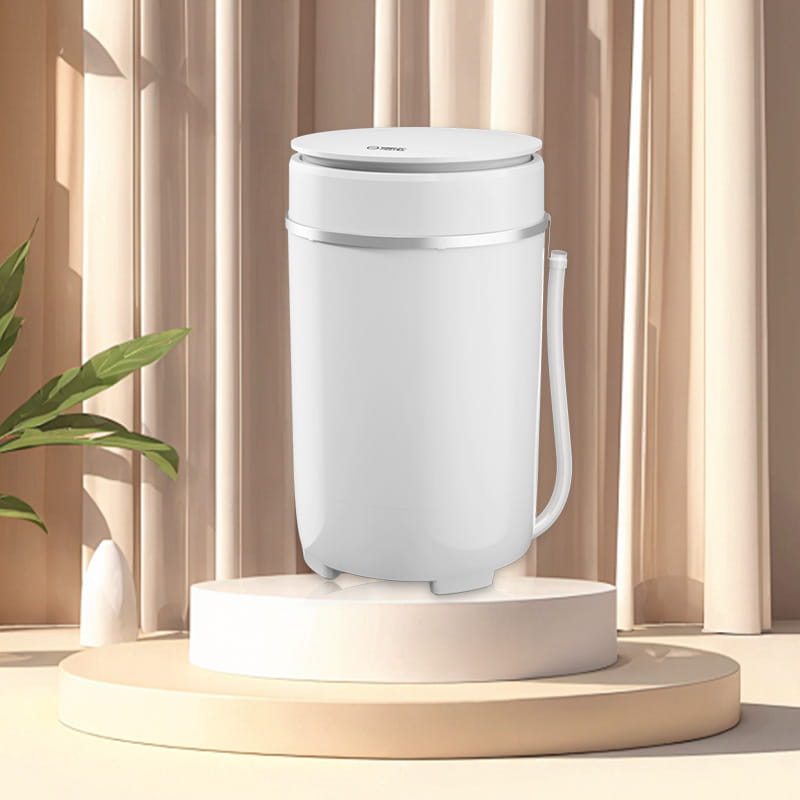
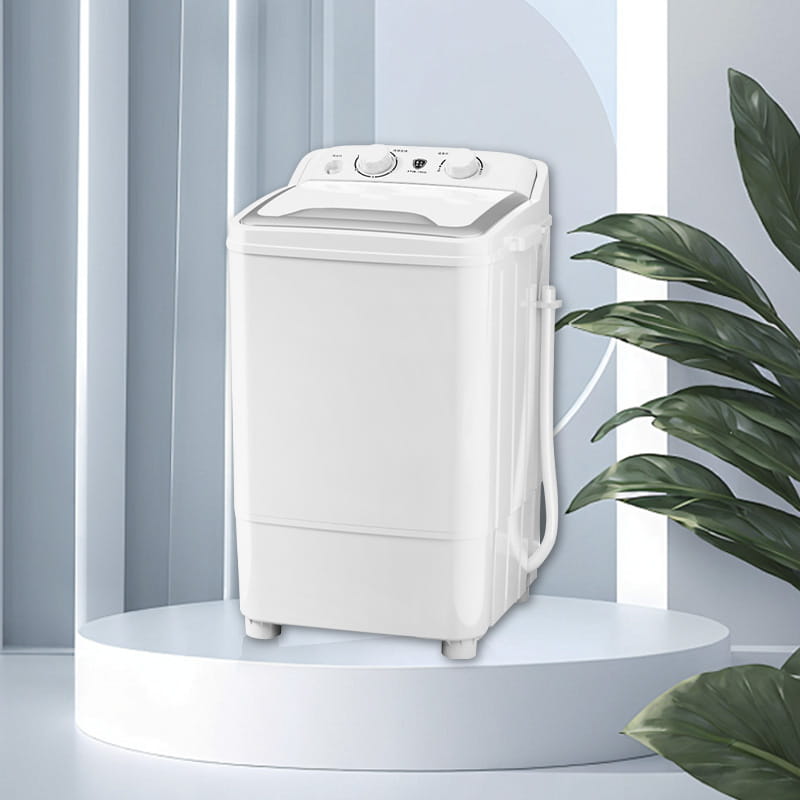
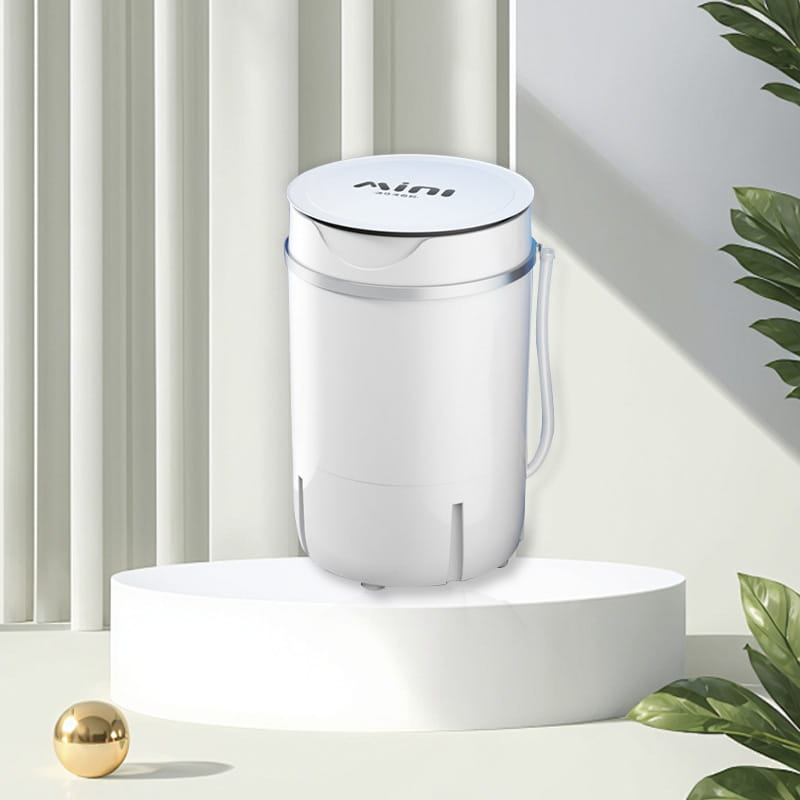
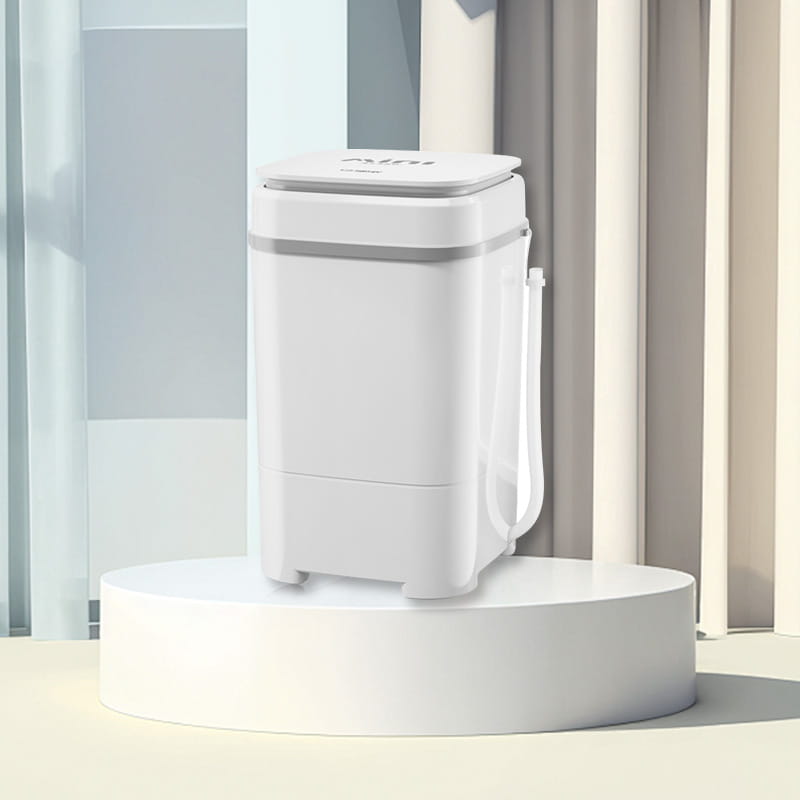
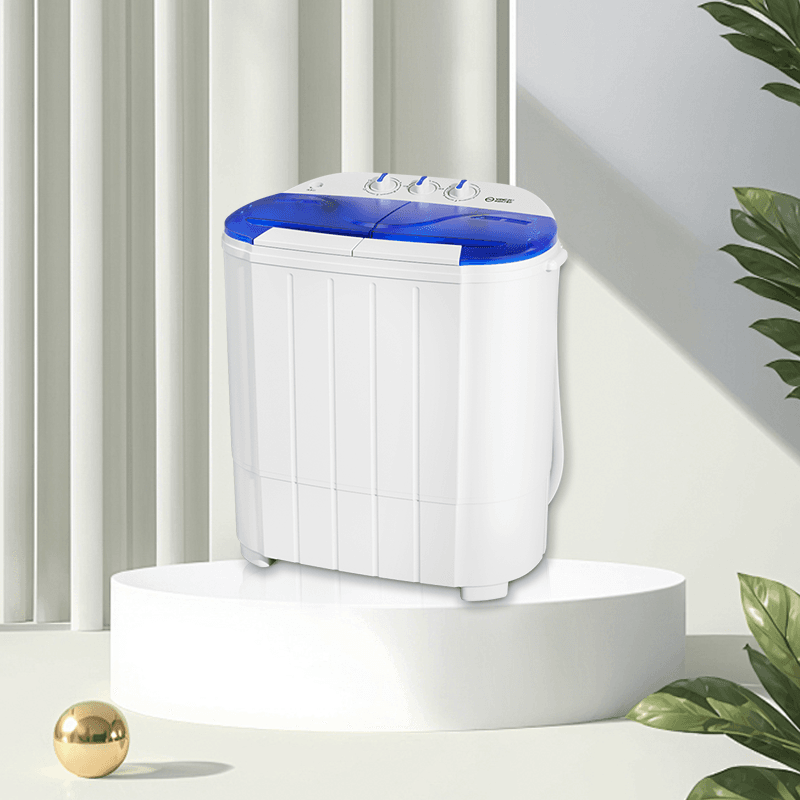
The company's semi-automatic mini washing machine line is built around several of the trade-offs covered above. Blue light antibacterial technology is included to help address the cold-water hygiene gap discussed earlier, since the wash water is not heated but the antibacterial function still targets common bacteria that can build up in laundry water. The internal tub is designed to be as large as practical within a compact shell, which helps narrow the capacity gap described in the earlier chart while keeping the unit a genuinely lightweight mini washer that can be moved between rooms without difficulty. A dump handle on the wash tub makes the manual draining step in a twin tub design noticeably more convenient than tipping or siphoning water by hand.
Smooth, high-quality mechanical components and a balanced overall layout are used to keep operation steady even at higher spin speeds, which is aimed directly at the noise and vibration trade-off explained in the radar chart section. The compact body fits into a living room corner, a balcony, or a small laundry nook, and folds into storage easily when not in use, supporting the kind of small space laundry solution that apartment living and dorm settings often call for. People comparing a lightweight semi automatic mini washing machine reviews list typically look for exactly this combination: reasonable capacity, easy draining, low noise, and a hygiene feature that compensates for the lack of a heater, rather than focusing on any single spec in isolation.
Matching the machine to the actual living situation matters more than chasing a single best portable washing machine label, since the right fit depends heavily on space, household size, and how the unit will be used day to day.
Working through this short checklist before comparing specific models tends to be more useful than relying on capacity or weight alone, since a compact laundry machine that fits well into daily routine will get used consistently, while one that is mismatched to the space or habits often ends up sitting unused.
It can work well for daily or near-daily use by one or two people, since smaller loads naturally fit the lower capacity, but a larger household running frequent big loads will likely need to run the machine more often than a full-size washer.
Lightweight blankets or single bed sheets can usually be washed if they fit loosely in the tub, but thick comforters and bulky bedding generally exceed the practical capacity of a mini washing machine and are better suited to a full-size machine.
Since most mini and semi automatic units wash with unheated water, they tend to use noticeably less energy per cycle than a warm or hot wash on a full-size machine, mainly because water heating is the largest energy cost in a typical laundry cycle.
Noise and vibration are usually manageable when the unit sits on a flat, stable surface with an even load, though a small unit spinning at high speed can sound louder relative to its size than a large, heavier machine.
Most semi automatic twin tub units have a wash tub and a separate spin tub that removes excess water for faster air drying, rather than a heated dryer function, so clothing still needs to air dry after the spin cycle finishes.



 English
  Español
  عربى
عربى 