Content
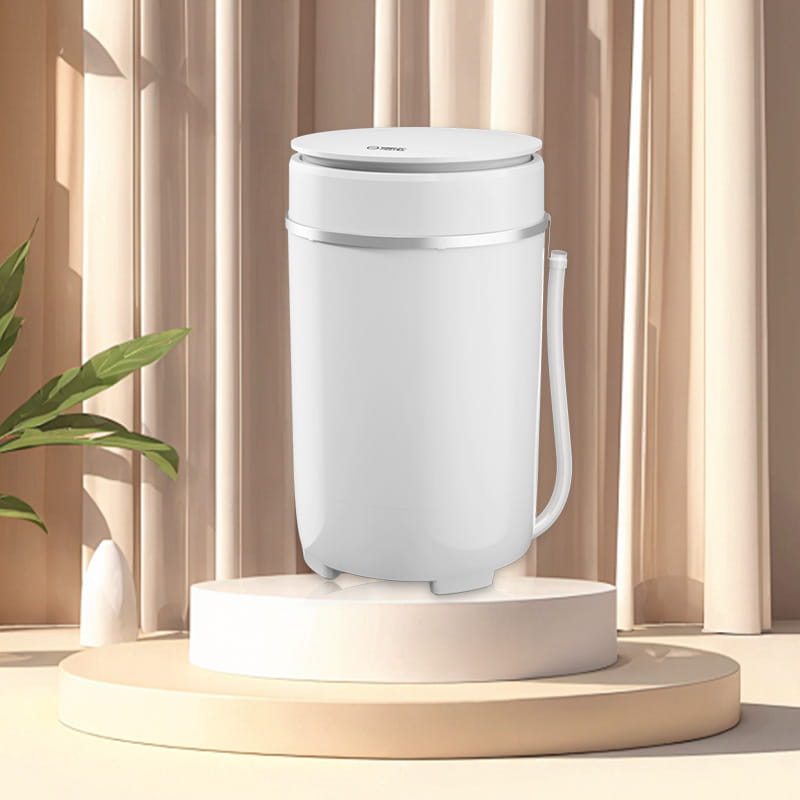
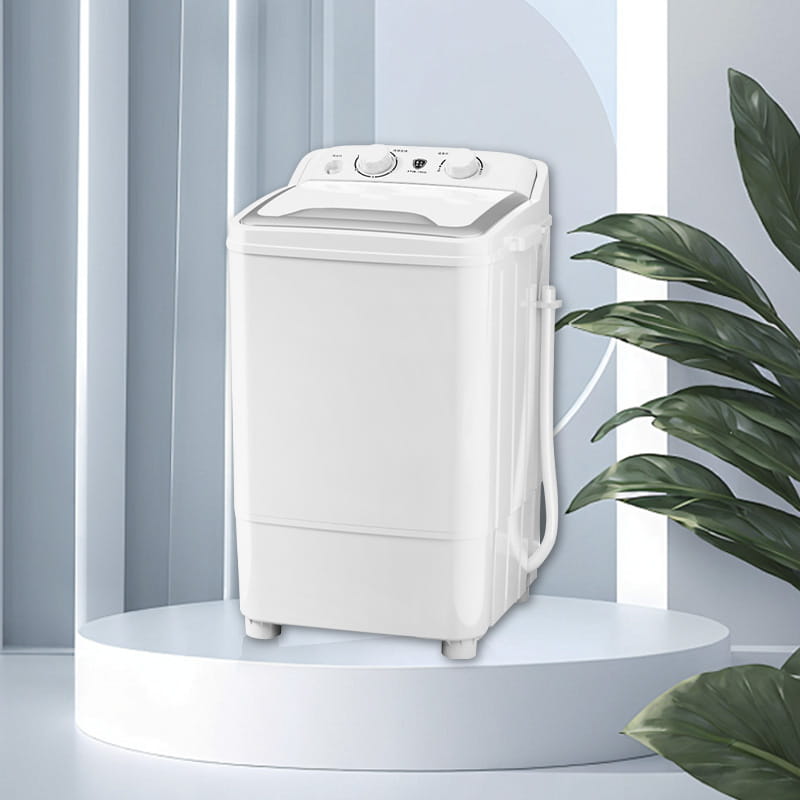
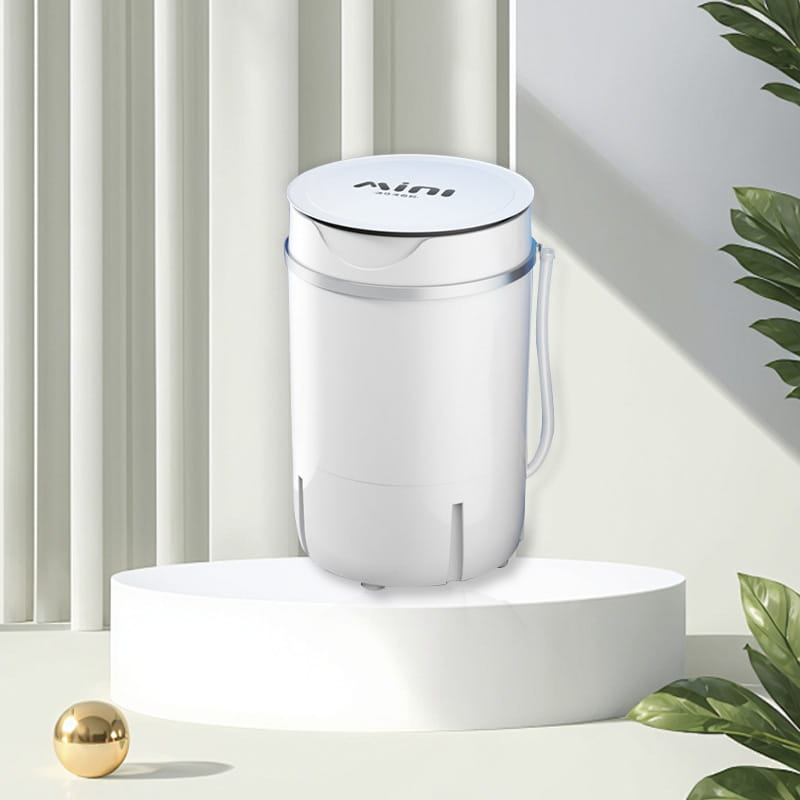
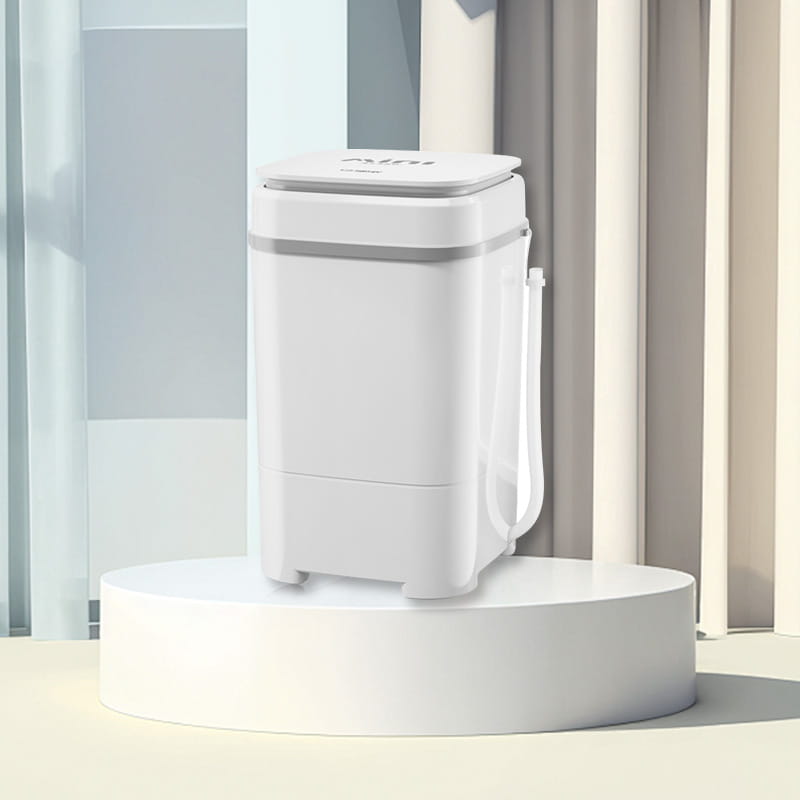
Compact washers have become an essential solution for millions of people living in apartments, tiny homes, dormitories, and RVs. The demand for a reliable small washing machine for apartments has surged as urban housing shrinks and mobility increases. Unlike traditional full-size washers, a compact washer fits neatly into tight spaces without sacrificing meaningful cleaning power. Whether you are a student searching for a dorm washer, a traveler needing a travel washing machine, or a family looking for a dedicated mini laundry machine for delicate items, compact models now deliver performance that rivals their larger counterparts — in a fraction of the footprint.
The market for small laundry machines has matured rapidly. Modern units feature blue-light sterilization, bionic wash wheels, food-grade materials, and quick 10-minute cycles — attributes that were once exclusive to premium full-size appliances. The 4.5 kg semi-automatic mini washer segment, in particular, has attracted attention for its ability to handle everyday garments — underwear, socks, T-shirts, and children's clothing — without mixing loads, reducing cross-contamination risk for households with babies or allergy-sensitive individuals.
Global urbanization is reshaping how people think about home appliances. With average apartment sizes shrinking in major cities across Europe, North America, and Asia, the apartment washer category has become one of the fastest-growing segments in the home appliance industry. According to industry research, the global portable and compact washer market was valued at over USD 1.4 billion in 2023 and is projected to expand at a compound annual growth rate exceeding 6% through 2030.
A key driver is the rise of the "second washer" concept — households that own a standard washer but invest in a small washer dedicated to intimate clothing, baby items, or heavily soiled sports garments. This separation prevents cross-infection and extends the lifespan of delicate fabrics. The portable washer also serves campers, van-lifers, and RV enthusiasts who require a camping washer or RV washer that can operate without a fixed water connection.
The bar chart above illustrates the steady upward trajectory of the compact washer market from 2019 to 2025. Growth accelerated noticeably after 2020, driven by increased time spent at home during global disruptions and a broader shift toward self-sufficiency in laundry care. The 2022–2023 period saw particularly strong adoption as consumers sought energy-efficient, space-saving alternatives to laundromat visits. By 2025, the market is estimated to approach USD 1.72 billion, reflecting both deepening penetration in developed markets and rapid first-time adoption in emerging economies. The compound growth rate of over 6% annually signals that demand for top-rated small washers is not a temporary trend but a structural market shift. Manufacturers that invest in build quality, quiet motor technology, and hygienic materials are well-positioned to capture the growing base of value-conscious buyers seeking long-term reliability over low upfront cost.
Not all compact washers are created equal. A top-rated small washer must balance multiple performance factors simultaneously: wash effectiveness, cycle speed, noise output, material safety, and footprint. The following comparison table breaks down the critical specifications consumers should evaluate when selecting a mini washer or portable washer.
| Table 1: Key specification comparison for compact washer categories | |||
| Feature | Mini Washer (4.5kg) | Portable Washer | Compact Top-Load |
| Rated Power | 300W | 200–250W | 400–500W |
| Cycle Time | 10 min wash + 5 min spin | 15–20 min | 30–45 min |
| Sterilization | Blue-light UV | None / Optional | Hot wash only |
| Material Safety | Food-grade PP | Standard ABS | Standard ABS |
| Water Connection | Top-fill (manual) | Manual bucket fill | Tap connection |
| Noise Level | Low (stable motor) | Very low | Medium |
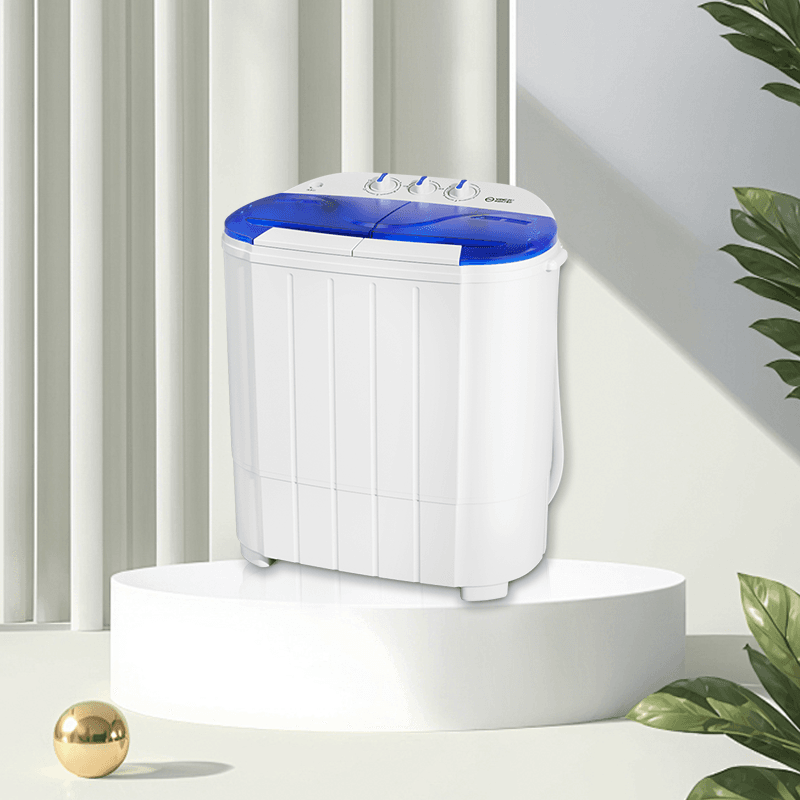
Among these categories, the 4.5 kg semi-automatic mini washer stands out for its combination of blue-light sterilization and food-grade PP construction — a pairing rarely seen at this price point. The bionic hand-wash wheel mimics the motion of manual scrubbing, delivering a deeper clean on collars, cuffs, and heavily worn areas. The anti-pinch flap design adds a practical safety dimension, particularly in households with children. Cord winding racks and removable draining baskets reduce clutter, while the plug-in top-fill water inlet makes the unit genuinely functional in spaces without dedicated plumbing connections — a critical requirement for the travel washing machine and camping washer segments.
One of the most common misconceptions about a small laundry machine is that its capacity is too limited for practical use. In reality, the 4.5 kg class covers the full spectrum of everyday intimate and light garments efficiently. The chart below visualizes the typical load composition that fits in a single wash cycle.
The horizontal bar chart above makes it visually clear that despite its compact dimensions, the 4.5 kg small washing machine for apartments handles a meaningful quantity of everyday items. Twenty pairs of socks or ten towels in a single load is far from trivial — for a single adult or a couple, this represents a full week's worth of intimate laundry. For families with infants, loading six sets of children's clothing alongside underwear and socks eliminates the need for hand-washing, which is time-consuming and less hygienic. The capacity figures listed are conservative manufacturer estimates; in practice, lightweight garments like sports undershirts may allow slightly larger loads. The key takeaway is that a quiet washer of this class genuinely replaces hand-washing for the garment types that benefit most from dedicated washing — delicate fabrics, intimate apparel, and baby clothes. This positions it as a complementary appliance rather than a replacement for a full-size machine, maximizing the efficiency of any household laundry routine.
Energy efficiency is a top priority for apartment residents and travelers alike. A portable washer that draws excessive power is impractical in RVs, camping environments, or apartments with limited electrical capacity. The line chart below tracks the projected cumulative energy cost of using a 300W mini washer daily over 12 months, compared to a laundromat-equivalent spend.
The line chart demonstrates a stark cost difference between owning a compact washer and relying on laundromat services throughout the year. At an estimated electricity cost of approximately USD 1–2 per month for daily short cycles on a 300W motor, the annual running cost of a mini washer amounts to roughly USD 11 — a figure that is nearly negligible for most households. By contrast, a user visiting a laundromat twice per week at an average cost of USD 4–5 per visit accumulates approximately USD 216 annually in washing costs alone, not accounting for transportation time and fuel. Over a three-year period, the savings from switching to a small washer or apartment washer can comfortably exceed the initial purchase price. This efficiency argument is particularly compelling for RV washer users and long-term travelers, where laundromat access is inconsistent and the convenience premium of on-demand washing is even higher. The 300W motor strikes a deliberate balance — powerful enough for thorough cleaning yet frugal enough to operate on standard portable power stations.
Choosing a small laundry machine involves trade-offs across multiple performance dimensions. The radar chart below compares two washer profiles: a quiet washer optimized for apartment use versus a standard portable model, across six key performance axes.
The radar chart reveals that the compact 4.5 kg mini washer achieves notably higher scores on wash quality, speed, noise control, and material safety compared to the standard portable washer baseline. Its blue-light sterilization and food-grade PP materials push the material safety score to 95 out of 100 — a dimension where most portable competitors fall short. The 10-minute wash plus 5-minute drain cycle contributes to a speed score of 92, making it the most time-efficient option available in this class. Noise control at 88 reflects the stable, low-frequency motor that does not produce significant vibration or auditory disruption — a critical requirement for apartment washer users with thin walls and neighbors in close proximity. The standard portable unit scores higher on raw portability due to its lighter construction, but this advantage is offset by lower wash quality and absent sterilization features. For users who prioritize hygiene, speed, and quiet operation — the typical profile of a dorm washer or travel washing machine buyer — the mini washer class offers a meaningfully superior overall package.
The versatility of a small washing machine for apartments extends well beyond apartment living. A single compact unit can serve fundamentally different user profiles, each with distinct priorities and usage patterns:
Each of these use cases demands a slightly different configuration of features, but all converge on the same core requirements: compact size, reliable performance, low noise, and easy water management. The 4.5 kg semi-automatic design satisfies all four simultaneously, making it one of the most cross-functional appliances in the small home appliance category.
Two technological features distinguish premium mini laundry machines from basic alternatives: blue-light sterilization and bionic wash wheel design. Understanding the science behind these features helps buyers make more informed decisions.
Blue-light UV irradiation disrupts the DNA and RNA of bacteria, mold spores, and certain viruses, preventing their reproduction. In a washing context, this means that intimate garments and baby clothing can be cleaned to a hygiene standard that detergent alone cannot reliably achieve. Standard household laundry detergents are effective against organic stains but have variable efficacy against resilient microorganisms, particularly at lower water temperatures. The blue-light system in the small washing machine for apartments category operates during the wash cycle, combining mechanical cleaning action with photochemical sterilization for a dual-mode clean.
Traditional agitator-based washing machines use a pulsating drum motion that can stress fabric fibers over time, leading to pilling, shape loss, and color fading. The bionic wash wheel mimics the gentle kneading and rolling motions of hand-washing — applying pressure at specific points along the garment rather than uniform agitation. This approach is particularly well-suited to the garment types that a quiet washer in this class is designed to handle: elastic underwear, lightweight cotton T-shirts, children's synthetic fabrics, and microfiber sports undershirts. Clothes emerge cleaner than hand-washing with substantially less mechanical wear.
The column chart above presents estimated fabric wear index scores across three common wash methods, where a lower score indicates gentler treatment of fabric fibers. The bionic wash wheel achieves an index of just 18 — significantly lower than even hand-washing at 28 — because the controlled, rhythmic pressure of the bionic mechanism avoids the uneven, sometimes forceful rubbing that occurs with manual cleaning. Standard drum agitators score 72 on this index, reflecting the high mechanical stress they impose on fabrics, particularly at high spin speeds. For owners of delicate lingerie, elastic undergarments, or premium athletic wear, the bionic wash approach meaningfully extends garment lifespan. Research from textile industry labs suggests that reducing wash-induced fabric stress by 30–40% can extend garment usable life by one to two seasons, translating into measurable long-term wardrobe savings. This makes the mini laundry machine not just a convenience purchase but a financially rational one for anyone who invests in quality clothing.
With so many options in the compact washer and portable washer segments, narrowing down the right model requires a structured evaluation. The following decision framework helps buyers identify which features matter most based on their specific living situation:
| Table 2: Feature priority guide by user type | |||
| User Type | Top Priority | Secondary Priority | Recommended Feature |
| Apartment Dweller | Quiet operation | Compact footprint | Low-frequency stable motor |
| Family with Baby | Sterilization | Safe materials | Blue-light UV + Food-grade PP |
| Student / Dorm | Cycle speed | Low cost per wash | 10-min quick wash + spin |
| RV / Camper | Off-grid compatibility | Low power draw | Manual top-fill + 300W motor |
| Frequent Traveler | Portability | Fast cycle | Compact body + cord winder |
Beyond the table's guidance, buyers should also verify voltage compatibility when purchasing a travel washing machine for international use. The standard model operates at 220V/50Hz, which is compatible with European, Asian, and Australian power grids. North American users should confirm voltage requirements before purchase. Checking the removable draining basket design also matters for users who may not have easy floor drain access — the plug-in drain system allows flexible positioning without the need for permanent plumbing attachment.
Cixi Yongda Electronics Co., Ltd. is located in Cixi, Ningbo, Zhejiang, China — one of the country's premier small home appliance manufacturing hubs. Established in 2003, the company brings over two decades of continuous manufacturing experience to the compact and portable washer market. With annual sales exceeding 100 million RMB and a mature, stable quality management system, Yongda has built a reputation for delivering reliable, well-engineered appliances that offer strong value across a wide range of market segments.
The factory supports a complete in-house supply chain, giving it a significant competitive advantage in both cost control and product consistency. Foreign trade accounts for more than 50% of total factory sales, with products currently exported to markets across Europe, North America, Southeast Asia, and the Middle East. Product packaging is specifically engineered for international logistics, with carton dimensions precisely matched to standard shipping container configurations — a detail that meaningfully reduces freight costs and carbon footprint per unit.
The factory's internal structure is designed to accommodate diverse customer requirements, from private-label OEM orders to customized product specifications. Lead times are optimized through efficient production scheduling and proximity to Beilun Port — just 35 kilometers away — ensuring reliable delivery windows for international buyers. Whether you are sourcing a mini laundry machine for retail distribution or a specialized compact washer line for a regional market, Cixi Yongda offers the manufacturing depth and export experience to deliver consistently.
Q1. Can a 4.5 kg mini washer handle adult clothing effectively?
Yes. The 4.5 kg class handles up to 6 adult T-shirts, 8 pieces of underwear, or 20 pairs of socks per cycle. It is best suited for intimate wear, light garments, and children's clothing rather than heavy items like jeans or winter coats.
Q2. Is blue-light sterilization safe for fabrics and users?
Blue-light UV sterilization operates during the wash cycle and is designed to target microorganisms without damaging fabric fibers or posing exposure risks to users. The system is enclosed within the drum during operation.
Q3. Does the mini washer require a fixed water connection?
No. The plug-in top-fill inlet allows the unit to be filled manually using a bucket, container, or handheld showerhead. This makes it fully functional in apartments, RVs, campsites, and hotel rooms without dedicated plumbing.
Q4. How noisy is the mini washer during operation?
The stable low-frequency motor is engineered to minimize vibration and auditory output during operation. Users in shared apartment buildings report that the unit can run without disturbing adjacent rooms, making it one of the quieter options in the quiet washer category.
Q5. Is food-grade PP material important in a washing machine?
Food-grade polypropylene (PP) is free from harmful plasticizers and chemical leaching agents that lower-grade plastics may release when exposed to warm water and detergents. For baby clothing and intimate garments that contact skin directly, material safety is an important hygiene consideration.
Q6. Can this washer be used as an RV washer or camping washer?
Yes. The manual fill design, 300W power draw compatible with most portable power stations, and compact body make it well-suited for RV washer and camping washer applications where conventional laundry facilities are unavailable.



 English
  Español
  عربى
عربى 